Quotation fun – Are poets introverts or extroverts?

In the Winter 2006 issue of Rattle, Alan Fox (editor-in-chief) interviews Jane Hirshfield.

Jane Hirshfield wrote:
I think two kinds of people become poets. Extroverts who go out and entertain the family friends, and introverts who hide in the bedroom and put what they write under the mattress. Allen Ginsberg, I imagine, was the first kind; I was the second. For me, words were not about pleasing or entertaining others but about creating a place of refuge, where I could find something out about what it means to have and be a self.

Which are you, introvert or extrovert? Although I enjoy a good conversation once in a while, I know I am an introvert. I appreciate silence.

Do you think a great poet must be either an introvert, or an extrovert? Of course, I’m inclined to think that the truly excellent poets are introverts, if only because they have the time to themselves to work on their poems. However, one could argue that the extroverts are the poets with more life experience, and thus, more important things to say.

Are any poets you know of both introverted and extroverted?

If you’d like see what others have said about this, go here.
Catch Episode 17 of The Countdown, miPOradio’s poetry show:

powered by ODEO

Hosted by Bob Marcacci, this episode features poems by:

– Robert Bohm: All This
– Brian Boutwell: untitled
– Ash Bowen: Broken Sonnet to the Building Super
– Mackenzie Carignan: Fascicles
– Christine Klocek-Lim: Once the Leaf Falls
– John Korn: In Belly Wood Grove
– Lilith Nassuri: retro
– Luc Simonic: You, Time & Silly Dad – As of November.
– Harry K. Stammer: Terror 29

Whenever a writer is unable to record their poem, Julie Carter reads the poem for THE COUNTDOWN.

Once the leaf falls


Your blue jacket is not the sky.
My hands are not skilled in all
things, as you once believed
long before your fingers grew
as strong as mine. Understanding
seems easy as you dismount
the bus, your backpack dangled
carelessly behind. The trees
above us do not interest you.
I document your footsteps
anyway, memorize the residue
of your childhood left behind
in the thick shadow of an oak
and its easy release of acorns
scattered into bits on the ground

as today’s wind moves your hair
aside, and not for the first time.
Suddenly your chin is strange.
My welcome falls into the breached
door of a future. Years from now
you will no longer be so pleased
to see me. Each week’s phone
call will fall upon the wry
ears of a man concerned
with different things

than those that interest me
now on this walk home beneath
turning leaves. Soon they will fall
into piles where I will pull you,
laughing as we jump into the damp
chaff of trees as though the weather
to come was not cold, not the end
of this year, not a difficult movement
into a season of harsh revelation.
You have no idea what bare branches
await, nearly broken already
from the collective descent
of autumn.

© 2006 Christine Klocek-Lim

It’s election day in the USA


Did you vote today? I voted around 9 am and at my rural Pennsylvania polling location, I was voter # 126. According to the workers there, that’s an unusual turnout for that early in the morning.


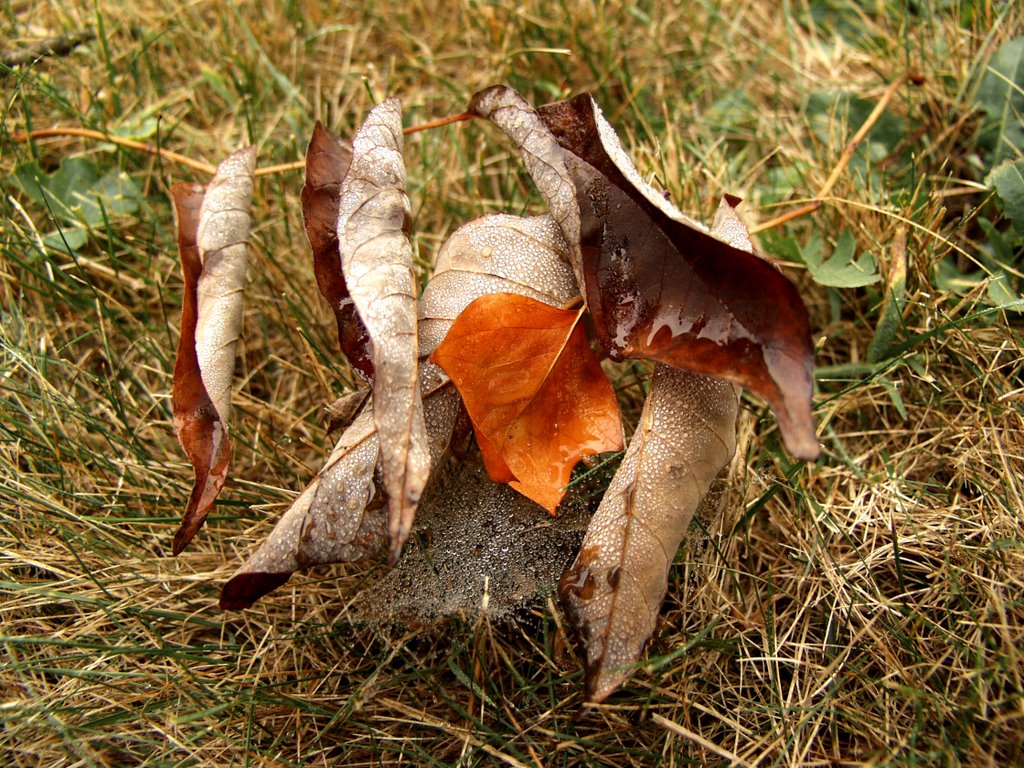
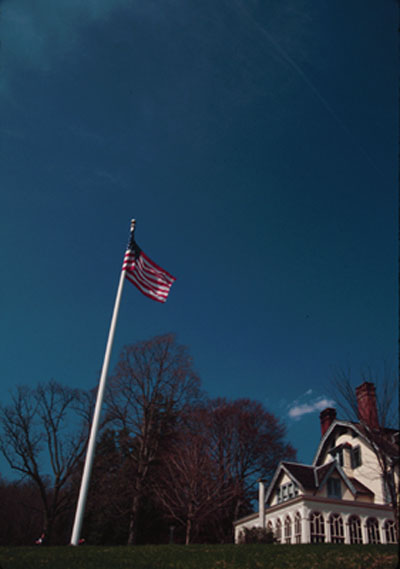
I took both of these photos in 2001. The first is the view out of one of the windows in the Metropolitan Museum of Art, New York, taken in February. The second is at Ringwood Manor in New Jersey, taken in May.

Quotation fun — Is political poetry valid in the USA?

These quotations are from the book, “Giving Their Word — Conversations with Contemporary Poets,” edited by Steven Ratiner. The quotations are taken from the chapter, “Carolyn Forché — The Poetry of Witness,” who Ratiner interviewed in 1994.

This first excerpt is taken from page 148:

Steven Ratiner wrote:
One of my first questions concerned her reputation as a “political poet,” a category generally disparaged in American Letters and viewed as a hybrid of the partisan polemicist and the benighted idealist. Her response enveloped the better part of the day and, in the process, provided powerful insights into the politics of language and the education of a young woman writer in the realpolitik of the literary world.

This second excerpt is taken from pages 156-157:

Carolyn Forché wrote:
“By 1980, it had become apparent to me that many Salvadorans had invested their time and even risked their lives to educate me about the situation in their country. And their hope, finally, was that I would come back to the U.S. and talk about it here. They didn’t realize that . . . discussing the circumstances that gave rise to the Salvadoran war wasn’t something expected of poets in my country and we wouldn’t be considered a viable source of information. I tried to explain, but because Latin Americans esteem poets so highly, they didn’t understand.”


To see the rest of this conversation, click here to enter the Poets.org discussion forum and view the comments.