Inquiring Minds and Other Clichés — Catherine Rogers

— a poetry interview series by Christine Klocek-Lim

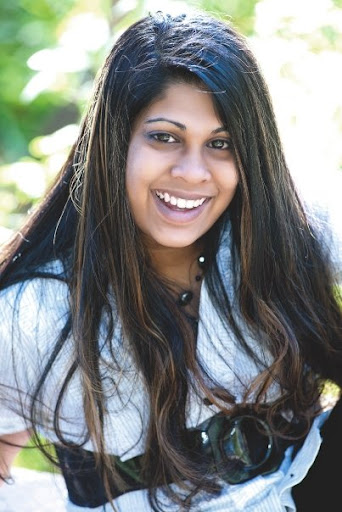
Catherine Rogers

1. What is your favorite poem that you’ve written? Read?

Of my own work, my current favorite is a poem called “Crone.” It’s not necessarily my best, technically speaking, but it represents a rich time of life, and I go back to it when I find myself worried about growing older.  It’s musical, and it also uses nature imagery to good effect.  I like that in a poem.  As for poems I’ve read, asking me to name a favorite is like asking me who’s my favorite friend; I love them all for different reasons.  When I want a good sensual, optimistic wallow, I go back to my old friend Walt Whitman and “Song of Myself.”  There’s an expansive glee in it that I still find irresistible, even after many years. In a more contemporary or contemplative mood, Elizabeth Bishop’s “At the Fish Houses.”  I love the perfect balance between solemnity and humor, the beautiful sonics, and especially the Baptist seal—“like me, a believer in total immersion.”

2. Do you think there is a disconnect between academic poets/poetry and online poets/poetry?

Not so much between academic and online as between academic and popular poetry.  The common wisdom is that there’s no audience for poetry any more, except other poets, but in fact there’s a huge audience for hip-hop/rap/spoken word poetry.  Academics may look down their noses at the form, but I find a great deal of energy and freshness in it. Of course, there’s mediocrity in every genre, not to mention downright junk. But informality and accessibility are not necessarily bad things in art. And a good beat doesn’t hurt.

3. Has the rise of the poetry MFA been positive or detrimental to the art?

I think the MFA has raised the bar in terms of craftsmanship.  There’s more technical sophistication out there, and more well-trained, competent, nice young poets are producing nice, competent, well-trained verse.  The challenge remains what it always was—finding something significant, or at least useful, to say.

4. Do you write for yourself or for an audience/reader?

Yes. For as long as I can remember, which is quite a long time, I’ve written with an imaginary editor looking over my shoulder.  I’m constantly aware of how a reader might react to my writing. On the other hand, I’m my own toughest critic. If I’m willing to turn my writing loose in public, it will probably find an appreciative audience.

5. How much of what you write is inspiration vs. perspiration?

If “how much” is a quantitative question, I have no idea.  If it’s a matter of motivation, well. . . . I do wish I could be more disciplined and craftsmanlike about my writing—dedicated daily writing time, that sort of thing.  But the truth is, I can go weeks, months, even years without writing anything, and then suddenly a poem will attack me and I can’t rest until I’ve wrestled it to the ground and got it on paper.  Once I have that core idea, I can spend more weeks, months and even years whittling, polishing and refining the thing till it’s a shadow of its former self.  It’s a very inefficient process, and probably explains why I haven’t yet produced so much as a chapbook.


6. Why do you read or write poetry?

I don’t remember a time in my life without poetry. My mother loved poetry and used to read it to me at bedtime; I was hearing “The Highwayman” when other kids were hearing “Good Night, Moon.”  So I had rhyme and rhythm in my head almost as soon as I could talk. I knew my mother loved poetry, so I would make up little jingles and recite them to her—verses only a mother could love—and she would write them down.  I was given collections of poems for birthdays and Christmas—good stuff, too: Dickinson and Whitman and Sandburg and Frost.  In such company, how could one not write poems?  I progressed from little jingles through the usual teen angst; then, in my twenties, I read that only poets read poetry, and I decided I would be that audience who read but didn’t write. It was such a relief. But poems kept ambushing me from behind the shrubbery and other dark places, and eventually I gave in and started to write again. But as I was saying before autobiography intervened, I write poetry because my mother loved poetry.  She might be responsible for a certain streak of old-fashioned sentimentality in my verse, but what can I say?  She gave me the gift, and I try to return it.

Bio:

Catherine Rogers holds degrees in English from Middlebury College and The University of Georgia, and a Master of Divinity degree from Boston College School of Theology and Ministry.  Her poems have appeared in Kalliope: A Journal of Women’s Literature and Art and in Touch: The Journal of Healing, and online in Autumn Sky Poetry.  In 2010, her poem “Dirt” was nominated for a Pushcart Prize. She is an Associate Professor of English at Savannah State University, the oldest historically Black university in Georgia.

~~~~~~~~~~~~~~~~

Couplets: a multi-author poetry blog tour – click for a list of participating blogs and daily entries
Upper Rubber Boot Books is coordinating a book blog tour for April, to help promote poetry and poets for National Poetry Month. Check back here for updates throughout the month of April (we’ll also post updates to our blog, and so will many of the participating poets).
Follow this event on Facebook or Goodreads.


~~~~~~~~~~~~~~~~

Nimbostratus and a nor’easter in PA

Nimbostratus

Today you said, sometimes it snows in April,
and I remembered listening to that song,
the sadness I could not forget, the spill
of grief I didn’t understand so long
ago. Twenty-three years later snow
has decorated every bloom outside.
Beneath the nimbostratus, flowers show
their strength: they bend but do not break. Inside
I contemplate the view and think, the best
clichés survive because they’re true. But still,
I know that sorrow lingers, often dressed
in subterfuge, fooling all until
one day the snowflakes bury everything
in anguish like a funeral in spring.

I’m posting this today in honor of the crazy nor’easter that’s socking Pennsylvania today. Hang in there everyone.

This is one of my cloud sonnets, originally published in Cloud Studies — a sonnet sequence, by Whale Sound Audio Chapbooks. If you want to hear something that will knock your socks off, go to the original link and listen to Nic Sebastian read the poem.

If you’d like a paper copy, click here to buy one. It’s free to download as a .pdf, audio MP3, and various e-reader formats.

The awesome photo is thanks to Harald Edens. He graciously allowed me to use the photo in my chapbook.

Inquiring Minds and Other Clichés — David W. Landrum

— a poetry interview series by Christine Klocek-Lim

David W. Landrum
(editor of Lucid Rhythms)

1. What is your favorite poem that you’ve written? Read?

Probably my favorite poem I’ve written is one called, “Gary, 1961,” written early in my career as a poet. It’s about a childhood experience and won a prize. The judge, Thomas Lux, said in his comments that it was “angry and elegiac.” I did not think it was angry but I see now that indeed it was.

To read, I like one called “Relic,” which is clear, has short lines, and a volta at the end.

2. Do you think there is a disconnect between academic poets/poetry and online poets/poetry?

I don’t see much of a disconnect at all. Online poetry is often academic and, as far as I can tell, there is not much difference between what online and “academic” poets write. I dispute the idea that one can be “academic.” I write poems that are based on literature but also purely lyrical poems that have no literary references in them, as I think most poets do.

3. Has the rise of the poetry MFA been positive or detrimental to the art?

Well, as an academe I tend to like degree programs, but I think the MFA industry has hurt poetry to an extent. It has created a network, an old-boys-old-girls club that publish each other’s poems and books and control what kind of poems are published, which is not good. When it began, MFA was good, but I think it has gotten too big and has too much monopoly power over the current poetic scene.

4. Do you write for yourself or for an audience/reader?

I usually don’t have an audience immediately in mind when I write, but as I write an edit a poem, I think of the audience of other poets and how a good poem sounds by current standards. But at first I write for me, to get the expression right, to make sure I say what I want to say and say it well and powerfully.

5. How much of what you write is inspiration vs. perspiration?

There has to be inspiration–by which I mean an idea that enters the mind. It can enter from various sources. I often get ideas when I am reading poetry—though, oddly, most often the idea has nothing to do with the content of the poem I am reading. Sometimes, as with “Gary, 1961,” it is simply something I’ve thought about a lot and it finally congeals into poetry. More rarely, things just float into my head. I think these arise from the language of our memory and something pulls it out. This is “inspiration.”

6. Why do you read or write poetry?

 I write poetry because I need to express myself. I remember how, as a kid, a teenager, and a young adult, poetry always spoke to me and identified feelings–resonated with my emotions. There were things I wanted to say, and I saw poetry was the best way to say them, the best way to express emotion and thought and conviction, so I began to write poetry. Having read a lot of poetry, I knew a little of the language, technique, and sound of it, so I began. It has been a long learning process.

Bonus question—anything else you’d like to say?

I love poetry and I love to write. I began as a formalist, but now my poems are about 50/50 formalism and free verse. Both are good media to convey emotions and strongly remembered experiences; or to write humor or more philosophical poems. The language of poetry is vast and I try to be inclusive in my style and techniques.

Bio:

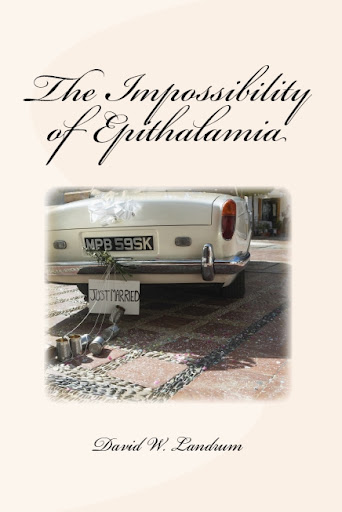
David W. Landrum teaches Literature at Grand Valley State University in Allendale, Michigan. His poetry, fiction, and literary criticism have appeared widely. He edits the online poetry journal, Lucid Rhythms, http://www.lucidrhythms.com.  His recent book of poems is The Impossibility of Epithalamia.

~~~~~~~~~~~~~~~~

Couplets: a multi-author poetry blog tour – click for a list of participating blogs and daily entries
Upper Rubber Boot Books is coordinating a book blog tour for April, to help promote poetry and poets for National Poetry Month. Check back here for updates throughout the month of April (we’ll also post updates to our blog, and so will many of the participating poets).
Follow this event on Facebook or Goodreads.


~~~~~~~~~~~~~~~~

Inquiring Minds and Other Clichés — Darla C. R. d’Aubigné

— a poetry interview series by Christine Klocek-Lim

Darla C. R. d’Aubigné

1. What is your favorite poem that you’ve written? Read?

My favorite poem that I have written is one that I wrote during my senior year of high school. It’s called My Sleeping Maiden. It’s not written in contemporary English, which I find to be meaningful to the context of the poem. I enjoy this particular poem, because not only is it a poem but also a story with multiple layers and morals. The few people who have read this yet-to-be-published poem have interpreted it in different ways, which is one of my goals when writing poetry.

Lewis Carroll’s Jabberwocky is a poem that I always will find to be entertaining to read as well as perform. It is written in such a way that it is appreciated by all ages; all you need is imagination. It is a poem that I believe keeps us young at heart.

2. Has the rise of the poetry MFA been positive or detrimental to the art?

I have recently become leery of academic programs in the creative writing discipline, to the extent that I have dropped my ambitions to earn a  degree in creative writing entirely. It has occurred to me that creative writing, unlike academic writing, cannot be taught, and I’ve become deeply skeptical of those who say it can be.

It is an art, as the question itself suggests, not a science. An academically certified writer is not guaranteed to be the next Stephen King or J.K. Rowling. So the question becomes this: why do these programs exist in the first place? These programs exist because writers who write McPoems and McStories need jobs to make ends meet. Who teaches writers to write generic pieces using formulas and theories? The programs do. Subsequently, many of the students of these programs then become educators in writing programs themselves, creating even more future educators of writing who will most likely not be published outside small presses. In short, do I think the poetry MFAs to be detrimental to the art? Yes, I do, and that applies to fiction writers just as much it applies to the writers of poetry.
      

3. Do you write for yourself or for an audience/reader?

Both, I think. When it comes to poetry, I write them to express myself to others when I cannot either find the right words or can’t find the appropriate time and place to express myself. I best write poetry when I am at a fever pitch.

4. How much of what you write is inspiration vs. perspiration?

It really depends whether I write poetry or fiction, both of which are equally important to me. Poetry is all inspiration for me. Fiction, however, is different. It takes inspiration to start a short story or novel, but it takes perspiration to finish it.

5. Why do you read or write poetry?

I read and write poetry for the very reason why art and beauty exist at all: to enjoy it. It is a huge part of my life that I cannot live without.

6. How has the way you write changed (or not changed) over time?

I have always depended on a computer to write. I cannot write in a notebook. I am too accustomed to going back to rewrite and revise entire sections during my writing process. That is impossible to do with ink and quill. That much has not changed.

Early in my writing career, I had everything on one computer – schoolwork, creative writing documents, research, games, etc. I realized that I was easily distracted and extremely disorganized. I now own a separate laptop for just my writing and related research, which keeps me focused.

College life has also affected how I write. I am less inspired to write in my apartment, because my academic work and creative writing shares the same environment and atmosphere. I prefer to write in quiet public places. My favorite place to write currently is a study lounge with dim lighting, posh Victorian decor, and a free, self-serve coffee and tea bar that a fellow writer friend showed me.

Bio:

Darla C. R. d’Aubigné, published under multiple pseudonyms for poetry and short stories, is a Singaporean-American who is currently pursuing a degree in psychology. A self-proclaimed Slytherin, she spends most of her free time with writing groups as a moderator and writing in uncrowded coffee shops. After spending years writing poetry and short stories, she is currently writing her first novel. Her written pieces explore the depths of the human psyche and criticize the evils of society.  

~~~~~~~~~~~~~~~~

Couplets: a multi-author poetry blog tour – click for a list of participating blogs and daily entries
Upper Rubber Boot Books is coordinating a book blog tour for April, to help promote poetry and poets for National Poetry Month. Check back here for updates throughout the month of April (we’ll also post updates to our blog, and so will many of the participating poets).
Follow this event on Facebook or Goodreads.


~~~~~~~~~~~~~~~~

Inquiring Minds and Other Clichés — Jim Daniels

— a poetry interview series by Christine Klocek-Lim

Jim Daniels

1. What is your favorite poem that you’ve written? Read?

Argh. I always flunk this one.

2. Has the rise of the poetry MFA been positive or detrimental to the art?

I think it’s fine, as long as students go into it with their eyes open. The MFA is an artistic degree, not a professional degree—it won’t give a job. It will give you a couple of years to write in a supportive community where you can focus on writing in an intense way. It might very well make you a better writer. That’s a good thing.

3. Do you write for yourself or for an audience/reader?

I write the first drafts for myself. I revise for an audience/reader.

4. How much of what you write is inspiration vs. perspiration?

I’m a big sweater. Not the kind you wear. I believe writing is hard work, and if you sit around waiting for the Muse to tap you on the shoulder, your hair is going to get dusty.

5. Bonus question! Answer any one of the following:

a. Do you ever include the works of others in your readings? If not, why not? If so, who and why?

No, I don’t. While I understand the gesture, I’m not a performer. I have a hard enough time reading my own work much less doing justice to someone else’s words.

b. Why do you read or write poetry?

It puts me in touch with a part of myself that pays close attention to what’s going on beneath the surface of life and what touches the heart in a lasting way.

c. How has the way you write changed (or not changed) over time?

I spend more time revising now than I ever did. I don’t know what this means. Am I getting better? Worse? I used to be a night writer, but since I became a parent eighteen years ago, I switched to becoming a morning writer.

d. What did you have for breakfast this morning?

Oatmeal and grapefruit and coffee. The breakfast of middle-aged poets.

Bio:

Jim Ray Daniels wrote and produced the film Mr. Pleasant. He wrote the screenplays for two previous films, Dumpster and “No Pets.” In addition, he is the author of three books of short fiction, including, most recently, Mr. Pleasant, Michigan State University Press, 2007, Best Regional Fiction Gold Medal, Independent Publisher Book Awards.

He has also published thirteen collections of poetry, including Trigger Man: More Tales of the Motor City,  From Milltown to Malltown, a collaborative book with photographer Charlee Brodsky and writer Jane McCafferty, 2010, and Having a Little Talk with Capital P Poetry, 2011. His poems have been featured on Garrison Keillor’s “Writer’s Almanac,” in Billy Collins’ Poetry 180 anthologies, and Ted Kooser’s “American Life in Poetry” series.

His poem “Factory Love” is displayed on the roof of a race car. Other recognition includes the Brittingham Prize for Poetry, the Tillie Olsen Prize, the Blue Lynx Poetry Prize, two fellowships from the National Endowment for the Arts, and two from the Pennsylvania Council on the Arts. He is the Thomas Stockman Baker Professor of English at Carnegie Mellon University.

~~~~~~~~~~~~~~~~

Couplets: a multi-author poetry blog tour – click for a list of participating blogs and daily entries
Upper Rubber Boot Books is coordinating a book blog tour for April, to help promote poetry and poets for National Poetry Month. Check back here for updates throughout the month of April (we’ll also post updates to our blog, and so will many of the participating poets).
Follow this event on Facebook or Goodreads.


~~~~~~~~~~~~~~~~

new review for Ballroom – a love story

I’m delighted to announce a new review for Ballroom – a love story has just been posted at Boston Area Small Press and Poetry Scene, written by Rene Schwiesow.

Here’s a tidbit from the review:

. . . Klocek-Lim produced a series of poems about the pain, challenge, commitment, weariness and bliss of dance lessons.  From Waltz to Cha-Cha she utilizes fresh phrases to show us images of the dances, the dancer, and the connection to a dance partner and the environment. 

Click through to read the rest: Ballroom – a love story Christine Klocek-Lim.

Thanks to Doug Holder, Boston Area Small Press and Poetry Scene founder, for coordinating the review.

Inquiring Minds and Other Clichés — Donna Vorreyer

— a poetry interview series by Christine Klocek-Lim

Donna Vorreyer
(contributing writer at Voice Alpha)
1. What is your favorite poem that you’ve written? Read?
Written? I don’t have a favorite – that’s like choosing a favorite child. I will say that I am usually most proud of my more current poems than of older ones. I am especially fond of a series of poems I wrote last summer that were inspird by the letters of Elizabeth Bishop and Robert Lowell. They are starting to find homes – “Digging In” was featured on Linebreak earlier this year.
Read? I have a short list: “Forgotten Dialect of the Heart” by Jack Gilbert is at the top of the list, as well as “Coliseum” by Katie Ford, “At the Fishhouses” by Elizabeth Bishop, and pretty much anything by Whitman.
2. Do you think there is a disconnect between academic poets/poetry and online poets/poetry?
There shouldn’t be. But, unfortunately, I often think that there is. There can be an element of clique to those who are working/writing in academia – a “we-are-hipper-and-way-smarter-than-you” vibe that I can do without. (I see enough of that teaching 13-year-olds every day.) The community of poets in Chicago is so gloriously open and diverse that I don’t often experience this disconnect in my personal interactions with other local poets. However, I did attend my first AWP this year, and I definitely felt it there. I even had someone (who I don’t know, by the way) question why I was “bothering” to attend since I was “only a middle school teacher” and not interested in getting an MFA. So, the fact that I am active in the poetry community and have been fairly widely published and take my writing seriously seems unimportant to some. I choose to ignore those people and spend time with those, academic or not, who welcome me as a member of their word tribe.
3. Has the rise of the poetry MFA been positive or detrimental to the art?
As a teacher, it would be difficult for me to say that anything that gets people writing is detrimental to the art. I have heard others say that some MFA programs seem to be “degree mills” that don’t give honest feedback to writers who may need to be pushed to achieve quality work, but having no experience with an MFA, I’m not sure if it’s true. I’m sure that every program is different. I have some friends who highly value what they have learned in their MFA programs, and others who have dropped programs or felt them a waste of money. It certainly widens the pool of competition for publication, but that’s not necessarily a bad thing.
4. Do you write for yourself or for an audience/reader?
I write first for myself. But after a draft is born, it usually is revised with a reader in mind. If it only makes sense to me, it does not function as a means of communication, which I think a poem should do. The act of writing is an intimate and personal act. Once you decide to share that writing with the world, considering the reader is important. In the end, all poems are written for me in the sense that they teach me something about myself, about the way I see the world.
5. How much of what you write is inspiration vs. perspiration?
I draft pretty quickly, and I often use free writing and exercises to get started. The majority of my process is the perspiration part. I spend quite a bit of time revising before I show a new piece to anyone except a couple of trusted poet friends. I don’t wait until I am inspired to write, or I would never get any writing done. Free writing has been a wonderful way to get me writing nearly every day without worrying so much about the initial product.
6. How has the way you write changed (or not changed) over time? 
I used to draft, fiddle a little, and send my poems out into the world LONG before they were finished. I am more patient now, working over each line and word choice until I feel that they couldn’t be any other way. Then I put them away and wait awhile before looking at them again. Patience was a difficult thing for me to learn as a writer as I often am smitten with new things that I create. Learning to be more objective and wait has been the biggest change for me over time.
Bio:
Donna Vorreyer has traveled with her family to every continent except Antarctica and boasts an impressive collection of memories, including an excellent scar from a mountain bike crash in the Himalayas. Her poetry has appeared or is forthcoming in numerous journals including Cider Press Review, New York Quarterly, qarrtsiluni, and Rhino. Her chapbooks include: Ordering the Hours (Maverick Duck Press, Come Out, Virginia (Naked Mannekin Press), and Womb/Seed/Fruit (Finishing Line Press). Her website is: www.donnavorreyer.com and her blog is: djvorreyer.wordpress.com.
~~~~~~~~~~~~~~~~

Couplets: a multi-author poetry blog tour – click for a list of participating blogs and daily entries
Upper Rubber Boot Books is coordinating a book blog tour for April, to help promote poetry and poets for National Poetry Month. Check back here for updates throughout the month of April (we’ll also post updates to our blog, and so will many of the participating poets).
Follow this event on Facebook or Goodreads.


~~~~~~~~~~~~~~~~


Week 2 Roundup of Couplets: a multi-author poetry blog book tour

Inquiring Minds and Other Clichés — John Amen

 — a poetry interview series by Christine Klocek-Lim

John Amen
(editor of The Pedestal Magazine)

1. What is your favorite poem that you’ve written? Read?

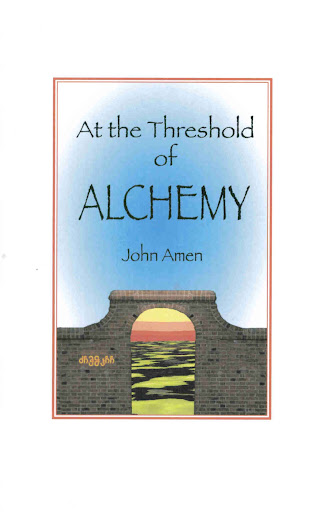
It’s hard to say what my favorite is of my own poems. I think that there have been pieces that were milestones for me, in terms of expressing something I had never expressed before or moving into a deeper level of craft. If I think of it that way, I would say that “Hiding” from Christening the Dancer was important for me as was “What I Said to Myself” from More of Me Disappears; also, my “Portraits of Mary” series from my latest book, At the Threshold of Alchemy, created new poetic, stylistic, and thematic possibilities for me as a poet.

In terms of poems that I’ve read? That’s a tough question, too. I suppose I would have to say that some of the poems I encountered in a volume called Naked Poetry (which first came out in 1969 but which I did not discover until the early 1980s when I was thirteen or fourteen) still have a hold on me. These works included poems by Robert Mezey, W.S. Merwin, and Sharon Olds among others. In addition to these works, I’ve been pretty deeply affected by the poems of the French Surrealists and the poems of John Ashbery. Of course, there are so many other poems that have been significant for me, but I suppose I’ll leave it at that.

2. Do you think there is a disconnect between academic poets/poetry and online poets/poetry?

I really don’t know. I would say that the disconnection is probably deeper than that. There are fundamental disconnections between many people and many artists; unfortunately, people in general tend to disconnect from others as a way to individuate and define themselves. So, I’m sure that there is a disconnection between this group of poets and that group of poets, but I think that the orientation towards disconnection is more fundamental that that, happens on an essential level, so that whatever divisions happen between groups are incidental to the more fundamental division we see in humanity at large.

3. Has the rise of the poetry MFA been positive or detrimental to the art?

Again, I don’t know. I suppose it has created a kind of homogeneity, as many argue. Then again, being involved in an MFA program allows someone to focus almost exclusively on his/her writing. That can’t be a bad thing. All said and done, I would probably say that the rise of MFA programs has had neither a positive nor a detrimental effect on the art of poetry. It’s one of those matters that seems to get a lot of attention, but perhaps its significance is exaggerated.

4. Do you write for yourself or for an audience/reader?

Well, both. Sometimes I am the audience, and sometimes I have an imaginary reader in mind. I’m not sure how much of a factor the “audience issue” is during the first write of a poem. I think I’m less concerned with an audience when I’m writing narrative poems. Sometimes, if I’m taking on a more surreal or non-linear approach, I do consider what the reading experience might be for someone else. This may affect how I write/edit; it may not.

5. How much of what you write is inspiration vs. perspiration?

I think many poems begin with inspiration; I think a first draft is very important, in terms of its energy. It’s difficult to edit energy into a poem; I can edit or revise the form of the poem, the phrasing, etc. Again, though, energy is a somewhat elusive quality. All said and done, I think a first draft can be successful if it’s infused with a certain energy, a sense of life, an assertion towards existence, if you will, even if there are numerous elements present that “don’t work.” So inspiration, if you want to call it that, is essential. Of course, though, a poem takes work to bring to completion, so a certain commitment to shaping it and working with it (perspiration) is pretty necessary, too.

6. Do you ever include the works of others in your readings? If not, why not? If so, who and why?

Except for a couple of occasions, I have not included the work of other poets in my readings. I’m doing a reading in April, however, in which I plan to share poems by W.S. Merwin and Robert Mezey, accompanied by a cellist. I look forward to this and think it will be a great opportunity to pay tribute to a couple of poems that had a deep impact on me as a reader, as a human being, and as a poet.

Bio:

John Amen is the author of three collections of poetry: Christening the Dancer (Uccelli Press 2003), More of Me Disappears (Cross-Cultural Communications 2005), and At the Threshold of Alchemy (Presa 2009), and has released two folk/folk rock CDs, All I’ll Never Need and Ridiculous Empire (Cool Midget 2004, 2008). His poetry has appeared in various journals and anthologies, including, most recently, Rattle, The New York Quarterly, The International Poetry Review, Gargoyle, and Blood to Remember. He is also an artist, working primarily with acrylics on canvas. Amen travels widely giving readings, doing musical performances, and conducting workshops. He founded and continues to edit the award-winning literary bimonthly, The Pedestal Magazine (www.thepedestalmagazine.com).

Readings:
John Amen is doing a series of readings in April. Please click the link to view his itinerary: www.johnamen.com – schedule.

~~~~~~~~~~~~~~~~

Couplets: a multi-author poetry blog tour – click for a list of participating blogs and daily entries
Upper Rubber Boot Books is coordinating a book blog tour for April, to help promote poetry and poets for National Poetry Month. Check back here for updates throughout the month of April (we’ll also post updates to our blog, and so will many of the participating poets).
Follow this event on Facebook or Goodreads.


~~~~~~~~~~~~~~~~

Inquiring Minds and Other Clichés — Karen J. Weyant

— a poetry interview series by Christine Klocek-Lim


Karen J. Weyant

1. What is your favorite poem that you’ve written? Read? 

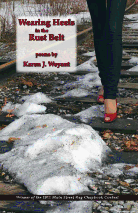
My favorite poem that I have every written is called “The Inevitable” – which took about three years to write and revise.  It was originally published in The Fourth River, but also appears in Wearing Heels in the Rust Belt.  However, I have to add, that when I do readings, audience members seem to really like “Roadkill Girls” originally published in The Fiddleback

It’s funny, but if you were to ask me my favorite of anything else, such as my favorite song or my favorite movie, I would stumble, but I know my favorite poem of all time is “Feared Drowned” by Sharon Olds.  This work displays stark and beautiful imagery, with an overall theme that  we can never find what has once been lost.  It’s a beautiful poem. 


2. Do you think there is a disconnect between academic poets/poetry and online poets/poetry? 

I’m afraid that I don’t know what really defines an “academic poet.”  I know that some poets who teach at publish-or-perish institutions have to publish in the “right places” and those right places often do not include online journals. Unfortunately, I believe there is still a mistrust in poetry that is published online, and I’m not sure why.  Poetry, like all art, must evolve and we cannot escape the Internet.  From a more practical standpoint, I find online journals wonderful teaching tools in the classroom.  I teach at a rural community college, and it’s wonderful to take my students to the computer lab and show them beautiful online journals such as diode.

But maybe that disconnect is fading.  Some of my favorite poets writing today, including Mary Biddinger, Jeannine Hall Gailey, Dorianne Laux, and Traci Brimhall, publish online and in print journals.  


3. Has the rise of the poetry MFA been positive or detrimental to the art? 

I guess I have to preface this answer by explaining that I don’t have an MFA, but I have many friends who are great poets and do have MFAs. So, I guess in some aspects, I know both sides.  I do not believe that there are too many MFA programs, nor do I believe these programs are detrimental to the arts.  In fact, there is a big  part of me that finds all the arguments a bit tiresome.  Why not use all this time (and words) to discuss poetry as an art form?  Or how to get more people to read poetry?  In general, I just don’t understand how programs that encourage a love of any art can be detrimental.


4. Do you write for yourself or for an audience/reader? 

I teach rhetoric and composition and I always tell my students that audience is a very important part of any type of writing.  Perhaps, that is why I write narrative poetry – I want my readers to know the people and places found in my poems.  So yes, I write for an audience who wants to hear stories, but because of the subjects of my poems, I also write for audiences who knows the blue collar/working-class world or who want to know this world.  

However, I wouldn’t be truthful if I didn’t say that there is a small part of me that feels a huge desire to capture the stories of working-class/blue collar/rural women.  Even if no one in the world wanted to hear these narratives, I would still write them! 


5. How much of what you write is inspiration vs. perspiration? 

Writing, for me, is mostly perspiration. There are many days that I struggle with even getting one line right in a poem.  In general, I am a slow writer and a slower reviser, and I admire my peers who seemingly write a whole chapbook in a month, a great collection in less than a year.  I wish that I had ideas in the same way that cartoon characters are inspired with magical light bulbs over their head, but that rarely happens with me. Instead, I have to force myself to sit down and face an empty notebook or a blank computer screen, write, and then not be too hard on myself when the immediate work that comes out is not inspired or polished. 


6. How has the way you write changed (or not changed) over time? 

Physically, I find myself approaching writing differently.  I used to draft everything on paper.  Now, while I still draft in small, cheap (I love Dollar Stores) journals, I find myself heading to the computer screen faster.  I also take more chances with my writing, with both language and subject matter.  I attribute this change to the fact that I write more now than I did ten years ago, but I also read everything I can get my hands on.  It’s the number one piece of advice I give to my students who want to write – read! 


Bio:

Karen J. Weyant’s most recent work can be seen in Cave Wall, Conte, Copper Nickel, The Tusculum Review, and River Styx.  Her poem, “The Summer I Stopped Catching Bees” recently appeared in Sundress Publications’ 2011 Best of the Net.  She is the author of two chapbooks, Stealing Dust (Finishing Line Press, 2009) and Wearing Heels in the Rust Belt (Winner of Main Street Rag’s 2011 Chapbook Contest).  She lives in Western Pennsylvania, but crosses the border to teach at Jamestown Community College in Jamestown, New York.  She blogs at www.thescrapperpoet.wordpress.com.


~~~~~~~~~~~~~~~~

Couplets: a multi-author poetry blog tour – click for a list of participating blogs and daily entries
Upper Rubber Boot Books is coordinating a book blog tour for April, to help promote poetry and poets for National Poetry Month. Check back here for updates throughout the month of April (we’ll also post updates to our blog, and so will many of the participating poets).
Follow this event on Facebook or Goodreads.


~~~~~~~~~~~~~~~~