my review of Dark And Like A Web

Dark And Like A Web by Nic Sebastian


download free
 PDF (170kb)
 EPUB (most e-readers)
 MOBI (Kindle)
 MP3 (13mb/14min)
 
purchase
 print edition
 CD
 

Last April, as I wrote a set of poems for NaPoWriMo, I also read a set of poems by Nic Sebastian. She called them “prayers and charms” and I eagerly clicked over to the website she’d set up for them each day. I didn’t want to miss any. My life was growing more hectic and difficult as the year progressed; her poems calmed me down. They helped me think about the deep spaces of the mind and heart and soul and how my internal landscape informs my dreams and wishes. Back in April 2011 I had no idea how much more insane my year was going to become.

Nic published this collection of NaPo poems later in the year, calling it “Dark And Like A Web” after a quote by Rainer Maria Rilke. She set up a website that offered online access to the poems as well as recordings of her beautiful voice speaking them with depth and emotion. I couldn’t help but wonder if she knew how these poems would help me get through my year. Every time some disaster occurred (death, earthquake, hurricaine, blizzard) I invariably picked up her chapbook and read one of the poems. They aren’t all peaceful.

In “there are howling wolves” the narrator explains how “their voices tesselate” the night.” How “we vibrate.” It isn’t a comfortable sensation. As the short poem progresses, the reader stumbles over “shattered constellations” and “pieces / of this night.” There is no comfort to this poem, except that very discomfort creates a sort of truth that comforted me. At the very end of the poem, the speaker talks of how “we are not coming” and “never were.” People don’t always figure it out. After an unexpected death in my family this past summer, I felt comforted by this truth. The poem is completely surreal, but the core of it is emotionally real.

Other poems in the chapbook resonate similarly. In August I went on vacation with my family to Washington, DC. While we stood on the National Mall, an earthquake confused our day. People wandered everywhere while random sirens pierced the streets. Two days later we were in Ocean City, Maryland, trying to finish our vacation on the beach. Hurricaine Irene dismantled those plans and we were evacuated along with thousands of others. Cars packed the roads and I read Nic’s poem “containing prayer beads and Bangkok.”

This poem is set in Bangkok and Seattle but really the cities don’t matter. It’s the internal landscape of the poem that accompanied me on my journey. I wanted what the speaker of the poem wanted: peace. Love. But, “he tells me to find / my own mantra.” The poem speaks a list of exotic places and fills them with gorgeous imagery: “black hair / kicking in the wind” and “gold-shot pain / of sunset.” The beauty is always accompanied with an active rushing away from peace. The end of the poem renders the speaker mute. That is what disaster does to a person. Once again, I was strangely comforted. This chapbook was the friend who lived across the country from me. The friend I couldn’t talk to very often. The friend who nevertheless understood exactly what I had been feeling in the midst of destruction.

Last year I promised Nic a review of this chapbook. I could go on about the imagery of the poems, their beautiful lines and surreal verbs. How they spoke to me even when I thought I couldn’t go on because the earth was covered with snow and a lack of water. Or how the characters in the poems let me dream about places I wanted to go: mountains and rivers and temples. Ultimately, I can’t really review this collection of poems, can’t say: “oh, I give it three stars or five or seven.” Because this particular chapbook of poems carried me like a boat over the drama of my emotions this past year. I can’t help but love them. As the opening poem of the book states: “I think you are / a small flame embedded / in silence.” Thank you Nic, for giving voice to that flame and letting it light my way for those difficult months. Thank you for that gift.

Coventina

My dear friend Larina lost her son this past weekend. I am heartbroken for her. He was only eleven years old and though he had cerebral palsy, his passing was unexpected. Several years ago I wrote a poem for her based on a newspaper article written about her and her son. I’m pasting it below in honor of his memory.


Coventina


— river goddess, known for healing

That morning he dreamed of dolphins. Deep waves. Smooth hide and clicks against his body. The sea moved his feet as if he could walk on water and he woke sweating, afraid of the thunder outside. Afraid of the rain, but the dream remained, too, even as his mother strapped him in his wheelchair. For once, the squeak of its joints didn’t upset him. Because this was his first time at the pool, he tried not to show how much he wanted it but her face told him she knew. She knew he wanted to swim, even if his limbs disobeyed his mind. Even if that black feeling came back. And the water was warm. Buoyant. They’d painted dolphins and fish on the tile so he swallowed the fear down, almost choking. Closed his eyes. He imagined the pool was a river, an ocean. The slap of hands splashing became waves and he almost smiled as the lights flickered, buzzing electricity. When they blinked out and emergency lamps clicked on, he discovered the mural on the ceiling: a woman with butterfly wings, black hair flowing past her cattail dress. Coins strewn around her feet. Shimmering green light everywhere. He wished he had a dime to toss, but then his mother lifted him up and let go and for the first time in his life he moved by himself. He laughed, something inside breaking open like a tsunami, like an impossible dream, and then he saw his mother smile as tears slipped down her face like rain.

— for Larina and her son Zack


.

Things that frighten me

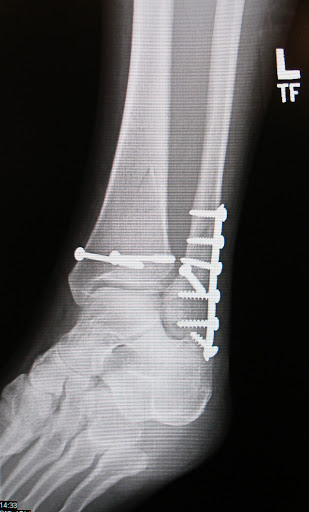
You would think I’d say zombies or perhaps my house burning down. Fear of being poor. Fear of tornados. Yeah, no. None of those things. I’m not even really that frightened of breaking my ankle again, though it would suck. Honestly, there are only a few things that really make my heart race: death (mine or my family’s), illness (fatal and unpleasant, mine or my family’s), and breaking one of my fingers or otherwise permanently damaging my hand.

I’ve lived through death (not my own, obviously) and illness and they are both hideous and unpleasant. I’d like to not do it again but I guess I’ll have no choice at some point. Shit happens.

However, I have never injured my hands. I’ve strained a muscle or two and had my wrist ache from too much mousing (computer mousing, that is), but I’ve never broken a finger. And I bet that would be unbelievably HORRIBLE. Why? Because I couldn’t type. Omigosh I can’t even think about it without feeling hysterical. People think of musicians and surgeons and their hands. They say: oh that would be tragic, if something happened to her hands. Why, why don’t they ever mention writers?

I’ve thought about it. Even if I never truly sell a lot of books (or even sell any, which could definitely happen), the act of writing sustains me. I read an essay today about what success means for a poet (at Jeannine Hall Gailey’s blog) and her conclusion was that the writing itself was enough. I agree. (I strive to agree with that incredibly heathy attitude while I continue to weep and moan over the rejections that fly into my inbox.) Writing itself is a wonderful act of creation. Of defiance. Of hey, this is what I have to say and if you don’t like it, too bad rebellion against our culture and society and art and stagnancy and sometimes myself. Except, how the hell would I do that if something happened to my hands?

I know/have known two writers who lost the use of their hands through illness. One managed by typing with a pencil in her mouth. The other, well I don’t actually know how he gets by, but he continues to write amazing poetry. I know it’s not impossible. Still. I imagine it must be like that nightmare where your body is frozen and you can’t get up the hill. Words would back up inside my head like a truly epic sentence-traffic jam. And how would I read? How to hold a book? Even now my heart rate speeds up at the idea. . .

deep breath


deep breath


deep breath

.

E-journal? E-zine? Why do we have to preface everything online with a big E?

E

I keep seeing people posting online/tweeting/facebooking about great new e-journals. This reminds me that I edit an e-journal, though I’ve never once called it that. I used to call it an online journal but then I decided it was silly to make that distinction and stopped. Is making sure everyone knows it’s an e-journal so very important? And how does this even signify when so many print journals have e-issues? Or e-samples? Or e-mail? Oh wait, you don’t have to say e DASH mail anymore. The AP Stylebook finally lost the hyphen. Does that make e-journal an ejournal now?

The distinction between an e-journal and a plain old paper journal is, I believe, one of status. Everything online is terribly gauche and new, despite the decades-long existence of the internet. Print journals (I’m looking at you Poetry and The New Yorker) have a sort of embedded upper-class sheen that e-journals do not. This sheen of awesomeness carries over to everything print in the literary world, so that even a baby paper journal, fresh off its maker’s homemade press and with a distribution of oh, say ten, has a sense of literary hauteur attached to it that makes it better than an e-journal.

To this I say ptew! I spit on you, paper journal fanatics! Pjournals (hmm, that’s kinda interesting, onomatopoeiacally-speaking) are no more or less well-constructed than e-journals in this era of web-literacy. Attaching ridiculous distinctions to web-only journals is one of the things that continues to divide poets. We’ve got online poets and academic poets. Old poets and young poets. New formalists and lang-po practitioners. It’s like an episode of celebrity death match! Watch the dude who only uses his 1953 typewriter go at it against the smart phone guru! Bah.

All of these conflicts are a result of ego. Poets practice an obscure art which makes little to no money. The only way to keep score is to win contests and get published. Generally speaking, getting published in print leads to tenure. Getting published online leads to more readers. The decision between which venue to pursue is agonizing for all of us. Don’t you hate trying to decide where to send your poems? I know I do. The cure? Let’s all drop our Ps and Es and focus on quality publications rather than paper or pixels. Submit to both, then tell everyone about that great new journal you love without adding extraneous letters to a poor, defenseless word. After all, poetry is all about paring down the excess verbiage, right?

First poem tossed in the shark pool

(aka first poem posted on an online workshop)

I know exactly why I posted my poem to the No Holds Barred workshop on CompuServe on Friday, April 18, 1997: ego. I’d written a sestina and thought it was the best thing ever. I wanted someone to tell me how amazing it was. Isn’t that why all beginners post to online workshops? You bet. The very first line of the very first critique I ever received is this:

“When I read your poem, my first response was to laugh.”

I know you’re thinking: hey, it’s a comedic poem! Um, no. Hate to break it to you, but this poem was/is a melodramatic pile of adolescent angst. Sadly, I wasn’t anywhere near adolescence when I posted it, though I admit I was 22 when I wrote it (which is near enough to puberty to merit a bit of mercy, right?). It contains metaphor and personification. It follows the sestina form nicely. It uses concrete imagery and active verbs: “Cars like intermittent wipers. . .” and “I punch the glass. . .” Unfortunately, all these poetic devices are at the mercy of a poem which says nothing except: I exist and it kinda sucks. It’s just like all those other badly written poems floating around in the universe, pining for an eraser.

My response to that first sentence of critique? Devastation. Possibly a bit of anger. But what about the rest of the critique? you ask. Here is the second sentence of it: “I expect that you didn’t intend it to elicit this response, but the piece comes across to me as almost a parody of over-imaged poetic angst.” Oh snap! I think I might have cried, but I can’t remember now. The reader continued with some excellent details about why he found the poem impossible: “You start with the sound being a wild animal and by the third stanza, the animal is you and it is in agony for some completely unexplained reason.”

I didn’t see his point at the time. I was using creative license to make comparisons, all of which failed (hindsight! my old friend!). However, the point is that I had NO IDEA what the hell just happened. I posted my darling and it came back to me eviscerated. I’d never participated online before. I read the rules of the workshop just enough to know where to post without completely falling all over my virtual self in stupidity. Little did I know that here, online, people were going to read the poem and actually tell me the truth. See, I’d gone to college for creative writing. Some of the workshops there were brutal, but it was my fellow students who were red-lining everything, not my professors. Since what they’d written was also barely comprehensible drivel, I was confident in my contempt for their opinions. In this online workshop, however, I had no idea who this person was or what he’d written. How could I believe what he had to say was valid?

By noon I’d formulated a response. It contained a great many exclamations points, question marks, and I’m sure it would’ve had a ton of smilies if they’d existed back then in animated form (I have the universe to thank for sparing me that humiliation). To my credit, I was polite and answered some of his points with the barest inkling of reason since even then I knew that a reader, any reader, had to be able to at least comprehend my work once I released it into the pool. I revised a bit. I found it hilarious that this person didn’t even realize he was critiquing a sestina. My favorite part, the one which makes me writhe in embarrassment for my youthful self, is where I explain thus: “I actually wanted the reader to guess at this to provide an emotional atmosphere.”

His response?

“If, in the main character’s point of view, anything and everything is an animal, then I would regard the main character as psychotic and I usually find psychotic statements confusing. The poem is, to me, so highy [sic] internalized that it fails to communicate either a mood or a point of understanding to the reader.”

Did I find this helpful at the time? NO. Of course not. I was so traumatized by his use of the word “psychotic” in reference to my poem that I ignored everything else he said. Unfortunately, every word of his second sentence about the poem being highly internalized was an extremely useful and valid critique. There is a bit more, but the result is that he basically wiped his hands of me and my poem due to my complete and utter incomprehension of the situation. After that, three moderators posted apologies for him. Another person posted an excellent critique of my poem, all of which I ignored.

Fourteen years later I find myself in charge of an online workshop: Poets.org’s discussion forums. I’ve been at the job off and on since 2005 (several years hiatus in-between). I am the shark. I eat poems for breakfast. Now, you may be wondering: what is the point of this long, self-absorbed post already? And why the hell did she save her very first critique online? That’s kind of weird. My answer: I deserve to feel that sense of horrible dismay now and then because it’s good for me. It reminds me of what it felt like before I knew how to write a poem. Before I’d mutated into one of the evil sharks who munch on passive verbs. Because now people are tossing their poems into the pool and I would like to remember that while I can provide good, solid critique, there’s no need to eviscerate the poem while I do it.

I’ll be the first to admit, sometimes I fail at this. Just the other day I posted a somewhat sharp critique of a poem because after years of reading the same cliches over and over again, we who critique poetry grow bored and find ourselves fiddling with language just to keep ourselves awake. Snark is a great, freaking blast to write. So much fun can be had at the mercy of some poor, unsuspecting novice. When this happens and when I recognize it in myself, I pull out that first critique of mine and force myself to read it. I remember the sting. And instead of writing snarky criticism that delights in itself (oh, ego again!) I try to be merely truthful instead. And then I go write a poem. Maybe sometime soon I’ll post it and see what happens.

Cloud Studies – a sonnet sequence

I’m thrilled to announce that Whale Sound has published my collection of sonnets, Cloud Studies, as its third audio chapbook.

Working with Nic Sebastian was incredibly rewarding. She is an excellent editor and a sublime reader.

read Nic’s Process Notes here
read Christine’s Process Notes here

You can enjoy Cloud Studies in a number of different ways, thanks to Nic’s dedication to providing poetry in as many forms as there are readers. Here’s what she had to say about it:

Audio Chapbooks Evolution
And there’s so much new with the audio chapbook format!
Whale Sound Audio Chapbooks is offering some new options to the poetry consumer with the publication of Cloud Studies. The central question for the poetry consumer we have been asking as a publisher remains unchanged: How do you like your poetry served?
With this edition we’ve expanded the menu of options. As with previous audio chapbooks, you can:
1. Read each poem online as an individual post
2. Listen to each poem online as an individual unit
3. Download a free PDF of the whole chapbook
4. Download a free MP3 audio file of the whole chapbook
What’s new this time around? You can also:
5. Purchase a print edition of Cloud Studies from Lulu ($4.90 + shipping – this is cost-price, no author/publisher mark-up)
6. 
Purchase an audio CD of Cloud Studies from Lulu ($5.50 + shipping – again, at cost-price, no author/publisher mark-up)
7. 
Purchase an e-book edition of Cloud Studies from Lulu ($0.99 – cost-price)

One Tree Bridge by Dennis Greene

I had the honor of reviewing One Tree Bridge by Dennis Greene, and it is now in print! Here is an excerpt from my review:

Greene manages to give [hard truths] to us with a beauty of form and sound so delicately balanced that they go down easy.  The reader feels the burn of the poems but can’t help consuming more because we desperately need the knowledge. One Tree Bridge is the simplest possible metaphor for existence on our world, yet the message inside the poems is larger than that. The birth and death of an individual, of our species, are simply two stops on the road within an infinite universe. [It] explains that so much of what we think we know about the universe depends on our perspective.”


If you’d like to read the whole review, or buy a copy of the chapbook, please visit The Lives You Touch Publications. 

Mrs. Kringle’s Lament

They said we’d only get an inch of snow
but when I wake it’s covered up the road
and slush has pulled some branches down so low
my favorite tree looks like it might explode.
I trudge outside with gloves and scarf and salt
to promptly slip and fall upon my rear
before I even reach the curb. “Assault!”
I bitch, then freeze as something licks my ear.
I scoot away, my heart up in my throat
and think:
a zombie! when the icy slop
slumps to the side like puke on glass. A coat
so cheery green it makes me want to pop
out both my eyes emerges next to me.
I groan and pinch my nose. I know that face.
Those bells. That burp. He’s grown a sparse goatee
which doesn’t quite enhance the scraggly lace
sewn on his cap. “Oh, you again!” he sneezes,
grabs my sleeve as though I’ll help him up.
Yeah, right. I dodge his drunken grasp and seize
his pointed, chilly ears. He drops his cup.
I just don’t care. He thrashes, tries to kick
but cannot get away. “Where’s the deer?”
I snarl. I wish that Santa’d get here quick
before his merry crew drinks all the beer.
“You think I’d rat out my best friends? Oh please!”
he cries, then vomits just as someone’s head
ducks out of sight behind the frosty trees
like Samurai Jack, but drunk. And wearing red.
“I know you’re there, you might as well come out,”
I call, my spirits sinking to despair
as I catch sight of antlers and a snout
crouched low behind my car. I swear.
This happens every year. No joyful bells
for me, oh no. Instead, delinquent elves,
escapees from St. Nick’s gift wrap cartels,
crash in my yard to sleep. “Show yourselves!”
I yell again, not hoping for too much.
Surprise, surprise, who waddles out? The Man.
Kris Kringle. Santa Claus. I blink and clutch
my head (I drop the elf). “What’s the plan?”
I ask. I hope he knows what’s happening.
He “ho-ho-ho’s” and sways a bit, then slips
and suddenly I feel the bitter sting
of cognizance: he’s drunk from feet to lips.
I sigh and drag his jolly ass to bed,
park the sleigh, coax Rudolph to the shed.
The elf I tuck into an extra room.
The beer, I’m sure, is gone, and none too soon.


Happy Holidays!!


© 2010 Christine Klocek-Lim

Gabriel Gadfly’s Web Poetry Wednesday

. . . is a really cool thing. Okay, yes, he picked one of my poems today, so of course I like this new series of his, except he also picked nine other poems to feature. And he’s good at it. I hope he keeps at it, because I love when someone else weeds through the dreck to find interesting poetry and then shares it with the rest of us. Thank you Gabriel!

Go here and see what I’m talking about:

Gabriel Gadfly, Web Poetry Wednesday #3