Love poem for Valentine’s Day – Rumba-lady’s wrap

ballroom - cover w text

Rumba — lady’s wrap

I’m a fox and he has his hands
on me. I step back, wild.
He moves closer, twists somehow
and I’m curled in his arm,
walking forward.

I have no idea how I got here.

She says, now turn her again
and he unwraps me like a candied chocolate.
An exotic pear, un-netted.
A hairpin slipped loose.
I try to dance away
but he catches me
easily.

I’d say I was lost but it would be a lie.
The music is a leash and he is
turning me again.
I’m trapped
against his other side, walking backwards,
dizzy as a maple seed.
He pivots
and I follow.
I am a kite on a string.
Horse and halter. He smiles into the wind
and I let him let me go
into a double chassé.
Suddenly I am a stray balloon.
A missing key.

A dropped penny, desperate for him
to scoop me back up.

first appeared in Diode v5n2

My new website–> ChristineKlocekLim.com!

1sunset_2


Welcome to my new website! It’s been a long time coming and I’m sorry I have to pack my old one away in its virtual trunk, but when technology changes, so too must we.

I originally created November Sky with Dreamweaver, I think. I may have used something before that, but I no longer remember. Thing is, I’ve been online in some form or another since 1987, not with a website, but with email and various accounts at various places. Yes, I remember CompuServe and scrolling through the internet on a terminal. Not a terminal window, an actual, physical terminal. Anyway, the software I use to keep my website up and running is going extinct, so I have decided to merge my blog (November Sky Poetry Blog) and my personal website (November Sky) into one new place: christinekloceklim.com.

Some things from November Sky are gone (the photographs) and some poems, and some things have been added (I imported all my blog posts). Some stuff is new: the menus that point to my fiction writing. I’m planning on doing a lot more novel writing this coming year and I wanted this site to reflect that. I put up some easy to use menus and you should be able to find things fairly quickly.

In a couple of weeks, I will redirect novembersky.com to point here. I apologize in advance for any broken links.

One new and awesome feature of this site is that all of the Poem Sparks you thought were lost forever when Poets.org’s Discussion Forums were taken down are now here. I put a simple link on the right sidebar for you to click. All the Poem Sparks I wrote will appear. Additionally, you can use the Search box on the bottom of the right sidebar to find Poem Sparks, too.

To see them now, just click on the photo below.

POEM SPARKS!

spark0821


And that’s basically it! 🙂 Hope you enjoy the new place!

Ode to my children

Warning: incredibly sappy blog post ahead.

My older kid’s 18th birthday is tomorrow. In January, my younger son will turn 16. The thing is, I’m not the kind of person who looks backward a lot. Sure, I remember when they were babies (okay, I remember the screaming and the legos and the giggling), but I don’t have photos hanging on my wall or propped up on my desk. If I want to look at baby pictures, I have to go dig them out. The photo up above? I haven’t set eyes on that one in maybe ten years. It’s from 1995. Jeremy was 1 year old.

The surest way to grieve the past is to focus on it incessantly. The first thing that usually pops into my head when I think about the boys being little is all the times they almost died. Which, just, no. I’m not going to focus on that. Maybe it’s different for other parents. Maybe their kids don’t have allergies or heart defects or possible Marfan’s or that brain damage incident or whatever, but I’ve had all too many close calls with the great black hole of grief to ever go poking at the beast on purpose. I want to focus on the good stuff. Usually that’s the stuff that’s happening right now in front of me.

Both of my kids are crazy intelligent. I don’t really know how to explain what this is like. It leads to unexpected conversations and sometimes devices that scare the shit out of me being left on the steps and the odd sensation of knowing that they can solve math problems in their head (how do they do that?). A lot of people talk about having intelligent kids and everyone (according to the articles I read) wants intelligent kids, but many of them, when faced with the reality, pretty much are like: WTF. Hey kid, why won’t you follow the directions on the box? Why is it so hard for you to listen and do all the stuff everyone else does at your age?

Smart kids are difficult. Directions are boring. Putting things together the way you’re supposed to is boring. Toys with instructions are boring. Games are infuriating and boring (until you figure out how to reprogram them). These kids do weird shit like talk when they’re six months old or not talk at all until they’re four years old (then they speak in complete sentences with multisyllabic words that most adults don’t use or understand). They’re BORED all the time. School is usually BORING BORING BORING and “I’ve already read the entire textbook and this class is pointless now, Mom” by the third week of September.

A lot of people have bright kids. Not many people dodge school officials and psychologists like I’ve had to for the past sixteen years because really smart kids are kind of … not normal. Doctor’s charts have been a source of hilarity in my house for years. I’ve had to read up on my college statistics class so I could understand what the hell outlier meant. The funniest thing about all of this? No one believes you. Smart kids are supposed to get straight As. Most of them don’t. Smart kids are supposed to just be brilliant, easily, in totally predictable ways. They’re not.

Smart kids hate having to learn how to do things that are tricky, like riding a bicycle or tying their shoes or using a pencil (though scissors can be mastered at age one year). That stuff that requires muscle memory and practice is torture. Smart kids can intelligently discuss physics and the socio-political jokes from The Daily Show in their early teens, but learning how to grocery shop? Not so much. Smart kids figure out how to fool their teachers in kindergarten, but butt heads with their eighth-grade homeroom teacher. It’s kind of weird and cool and terrifying, at the same time.

As a parent, I have learned how to roll with most of this. I harp on the important things: don’t forget your epi-pen. Don’t expect the world to make sense. Learning that people act irrationally most of the time is, perhaps, the hardest thing to teach them. I even stumble over that one, still.

It’s weird, though, getting to this point. A parent of kids like this must be hyper-aware of the things society expects from children at certain ages, and know how to either hide their kids’ peccadillos or not give a shit, depending on the situation. My job has been to keep them away from the “specialists” and do-gooders, so that they can figure out who they are without the labeling that seems so prevalent these days. I wanted them to be bored at the right times. Slotting kids like mine into piles of activities makes them crazy (and me, too) and doesn’t help them figure out how to calm their racing brain at midnight enough to sleep.

I worked hard at showing them how cool it is to learn new things on their own because I’m convinced that public education, in many cases, is intent on stifling that urge. Jeremy reads the same books I do, the kind of books you don’t get to crack open in school until you’re in college or beyond. Zachary doesn’t like to read (which everyone thinks is at odds with being smart, and really isn’t) so I spend a lot of my time talking to him about online gaming and the internet and watching hilarious videos that he sends me and discussing the ethics of a modern society versus hunter-gatherer cultures among other things.

I spend a lot of breath forcing them to relax and take a break and not to worry so much about school. I have never been so convinced as I am now that education in our society and a love of learning is mostly incompatible. Public education teaches to the average and to the below-average. Gifted education? Hah. It’s a joke. It mostly consists of piling more BORING projects that require colored pencils and poster board on top of the regular classroom work.

All of this is to say one thing: I HAD NO IDEA what I was getting into. Dear everyone who wants a baby: the pitter patter of little feet thing is a LIE. Sometimes they crawl. Sometimes (like Jeremy), they never crawl, they roll. Sometimes they BREAK THEIR CRIB (Zachary did this. I’m not kidding) or figure out how to flip over their pack-n-play. They take apart their plasma night-light. They invent their own language and would rather go to a museum than have a birthday party.

My kids did NONE of the things everyone told me they would do. But you know what? I don’t mind. They’re the most interesting people I’ve ever met. I can’t wait to see what we do together tomorrow.

my review of Voices Through Skin

ISBN: 978-0-983-29310-1
$14.95
NOW AVAILABLE FROM SIBLING RIVARLY PRESS
Buy from the SRP Bookshop
Buy from Amazon
Buy from Small Press Distribution


I first read Voices Through Skin by Theresa Senato Edwards early last year. I’d previously published some poems from this manuscript in Autumn Sky Poetry, so I knew what to expect when I first opened the pages. Imperfection. Difficulty. I said as much in the blurb I wrote for the back cover. What I didn’t explain was the sense of vulnerability that permeates so many of the poems. Life is often frightening and difficult. Body and mind are inexplicably linked while navigating tragedy. The book illustrates this duality in its two sections: mind and body.

“The Smell of Alcohol” is a poem in the second part of the book, the ‘body’ section. It opens with imagery that places the speaker firmly in the hospital: the message tube used by the nurses is akin to “a clear snake ready to attack” and the reader immediately knows this is no comfortable poem. The speaker is afraid. We know this because the poem tells us that the child the speaker cares for is afraid. This fear bleeds into every description, every image the woman has of her daughter in the throes of illness. The poem ends on a deceptively light note. The girl is nearly grown. The mother is pleased her daughter doesn’t remember the hospital. The girl places “her long, strong fingers” on the mother’s hand in a strange reversal of care-giving. The mother hides the fear that still lurks in her mind, in the remembrance of alcohol. They say smell is the strongest memory trigger.

I came away from this poem remembering that smell from when my own child was in the NICU. It’s a strange thing to fear years after it’s all over. The imagery of the poem highlights this fear extremely well with its focus on blood and fever and alcohol. The poem is set within the ‘body’ of the book, but every time I read it I am forced into memory. The main focus of the poem for me is the very end, when the speaker is lost to the memory of her daughter’s illness. Body is tied to the mind. It will always be tied thus.

In the first part of the book, the ‘mind’ section, the poem “Battered” is terribly visceral. The imagery is extremely physical for a poem set in the ‘mind.’ The speaker’s body is vandalized. The speaker exlains this in great detail, using such words as “rammed” and “forced.” Strangely, the poem’s opening belies the reality: “No man who shared his sex with me / broke me.” One would think this is a mantra, proof of un-brokenness, but I found it not so. The poem is almost unbearably tragic. For really, what rape is a sharing? The poem tricks the reader into hope at the beginning only to take it away. The poem ends with this: “I remember being 26.” This is a tragedy. The speaker begins with the mind then shows how the brutalization of the body betrays the mind. Memory is all the speaker has left and it torments her. She remembers being whole. Being young in mind, as she no longer is.

The rest of the poems in the book are similarly heartbreaking. Frightening, at least to me. “Your Attempt” in the ‘mind’ section begins “I’m sorry I wasn’t there to stop you.” “Her Rituals” details the difficulty of OCD, a common theme in several poems. “Inventing Dead” ends with “Absence is hard, comes without granting. / I make my voiceless appeal.”

In the ‘body’ section the poem “Walls” ends with this idea: “I promised myself I would learn karate, find a new home in the spring.” This poem haunts me. One doesn’t need promises or karate unless one is a captive. This is an oddly metaphysical idea for a poem that’s set in the body. “After Surgery” details the burden of “the throbbing of flesh gone.” Of course, it’s the mental difficulty of surgery that seems worse in that poem, providing the reader with yet more evidence of the marriage of mind and body.

Some of the poems are written in third person, clearly with a less personal narrator. Some are so achingly personal I felt the furtive embarrassment that comes from reading someone’s diary, yet I could not stop reading because as I said in my blurb on the back cover, each poem illustrates the way suffering makes us human. The scars anchor us to the world. I wouldn’t accuse this collection of poems as being easy. They’re not. They’re not comfortable.

They’re worth reading anyway.

The scars one carries in life are proof that one has lived and survived. Both the mind and the body carry these scars. The poems document this in a way that the reader can’t ignore. Voices Through Skin is a kind of celebration. An inscription. A testament. This collection pays tribute to what so many quiet, courageous people have discovered through suffering and despite inevitable death: life is worth something. Worth everything.

12 days of Catmas


12 days of Catmas
On the first day of Christmas
my two cats gave to me
a dingleberry in a pine tree.
On the second day of Christmas
my two cats gave to me
two hair balls,
and a dingleberry in a pine tree.
On the third day of Christmas
my two cats gave to me
three dead mice,
two hair balls,
and a dingleberry in a pine tree.
On the fourth day of Christmas
my two cats gave to me
four pathetic howls,
three dead mice,
two hair balls,
and a dingleberry in a pine tree.
On the fifth day of Christmas
my two cats gave to me
five piles of poo,
four pathetic howls,
three dead mice,
two hair balls,
and a dingleberry in a pine tree.
On the sixth day of Christmas
my two cats gave to me
six stinging scratches,
five piles of poo,
four pathetic howls,
three dead mice,
two hair balls,
and a dingleberry in a pine tree.
On the seventh day of Christmas
my two cats gave to me
seven shredded sparrows,
six stinging scratches,
five piles of poo,
four pathetic howls,
three dead mice,
two hair balls,
and a dingleberry in a pine tree.
On the eighth day of Christmas
my two cats gave to me
eight hissy fits,
seven shredded sparrows,
six stinging scratches,
five piles of poo,
four pathetic howls,
three dead mice,
two hair balls,
and a dingleberry in a pine tree.
On the ninth day of Christmas
my two cats gave to me
nine fishy farts,
eight hissy fits,
seven shredded sparrows,
six stinging scratches,
five piles of poo,
four pathetic howls,
three dead mice,
two hair balls,
and a dingleberry in a pine tree.
On the tenth day of Christmas
my two cats gave to me
ten tons of fur,
nine fishy farts,
eight hissy fits,
seven shredded sparrows,
six stinging scratches,
five piles of poo,
four pathetic howls,
three dead mice,
two hair balls,
and a dingleberry in a pine tree.
On the eleventh day of Christmas
my two cats gave to me
eleven spitting kittens,
ten tons of fur,
nine fishy farts,
eight hissy fits,
seven shredded sparrows,
six stinging scratches,
five piles of poo,
four pathetic howls,
three dead mice,
two hair balls,
and a dingleberry in a pine tree.
On the twelfth day of Christmas
my two cats gave to me
twelve stolen salmon,
eleven spitting kittens,
ten tons of fur,
nine fishy farts,
eight hissy fits,
seven shredded sparrows,
six stinging scratches,
five piles of poo,
four pathetic howls,
three dead mice,
two hair balls,
and a dingleberry in a pine tree.

Pushcart Nomination for Coventina

My poem Coventina has been nominated for a Pushcart. I’m delighted. Thrilled. And really, really late posting about it. I received the email from O.P.W. Fredericks, the editor of The Lives You Touch Publications nine days ago. This particular poem is very near and dear to my heart and I’m so happy people are enjoying it.

Why didn’t I post about it sooner? I’ve been a little busy. In the last few weeks, I’ve battled a leaky roof, dance rehearsals, a recital squeezed into the smallest stage I’ve ever seen, sick kids, field trips, shopping, xmas lights and tree decorating, huge dead tree removal, moving a kid to a new room, moving furniture to another room, parties, cooking, painting various parts of the house, cleaning, and etc. I could go on ad nauseum about the craziness that is my life this year but it’s actually kind of unbelievable. I think it will all calm down by January 17, 2012. That’s going to be the awesomest Tuesday EVER.

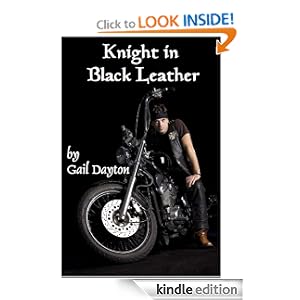
Knight in Black Leather by Gail Dayton

Romance novels are awesome. Read the following two sentences and tell me you’re not jealous you didn’t write them:

“The woman didn’t belong. She was as out of place in the dark winter streets of this part of Pittsburgh as a poodle in a jungle.”

Those gorgeous sentences are from a new book just out now on Kindle by Gail Dayton: Knight in Black Leather. Notice how the entire novel begins with a negative. “I thought we weren’t supposed to do that?” all the writing students will be thinking. Yeah, no. Please ignore that old high school English teacher advice. The second sentence gives us a little more information: the speaker is watching a woman, not with a vaguely disapproving attitude, but with curiosity. Just as the reader begins to think, “Hmm, interesting,” Dayton cuts loose with one of the most creative metaphors I’ve ever read. IN THE SECOND SENTENCE OF THE BOOK. And we’ve got location, time of day, and the season to boot. At first, I was jealous. I want to write like that. I REALLY want to write like that. Happily, my jealousy didn’t last long, mostly because those sentences are so intriguing that I couldn’t stop reading long enough to savor my envy. It faded away as quickly as an ice cube taped to a poodle’s butt.

When reading a romance novel, one jumps into the thing with a single, solid certainty: the book will always have a happy ending. This book doesn’t disappoint with that, of course, but the journey toward that ending is so freaking awesome that I stopped thinking about it halfway through the first chapter. Another staple of the romance genre is the role of hero and heroine. My biggest pet peeve with romances is when these characters are stupid and fight all through the book about dumb things. A great many writers do this to create tension but it’s really just lazy writing, in my opinion. This novel does not fall prey to that problem. Eli, the hero, is one of the most likable characters I’ve read. He always keeps his promises. The heroine, Marilyn, is also incredibly decent. Neither of them fight over stupid things. Instead of fake tension created by fake problems, every single one of the plot points in this book arises out of who these two people are, how they got to be where they are in their lives, and how those experiences (both painful and joyful) cause them to react to each other in the midst of the larger plot. The sheer brilliance of the writing of these two characters makes me utterly grateful that Gail Dayton is alive and can type and apparently plans to continue for the forceable future at those tasks.

Eli and Marilyn felt real to me as I read their story. Neither was perfect yet neither was so completely a caricature of brokenness that I grew exasperated. I adored the way they met and how they grew to know each other. I would’ve been perfectly content reading about their love story, except the book managed to introduce supporting characters that were just as real as Eli and Marilyn. Marilyn’s family, and the characters close to Eli were just as well put together. And then, as I settled into the book, thinking “oh, I know where this is going,” the plot intensified. Things happened that I just did NOT expect. And the characters STILL didn’t panic and do dumb things that made no sense. I don’t want to give anything away, so I’ve left the particulars rather vague in this review. Suffice to say, I laughed out loud during the first chapter. I sighed in happiness by the seventh and bit my lip in dismay by the twenty-third (I also might have cried a little, but I refuse to get into that).

On Twitter, Ms. Dayton said both her agent and her editors loved the novel, but that it “didn’t quite fit anywhere.” This astonishes me, especially now that I’ve finished reading it. Truly, if a well-published author can’t get a book this phenomenal published, I don’t know what that says about the state of the book industry. Bad things, I suppose. The novel, “Knight in Black Leather,” is now at the top of my list of books I adore and will read again over and over. Thank you Ms. Dayton for writing this book. Thank you. I loved it.

(Disclaimer: I do not personally know Gail Dayton. I’ve never met her. And yes, I think all of her books are awesome. My personal favorites are “The Compass Rose,” “The Barbed Rose,” “The Eternal Rose,” “New Blood,” and “Heart’s Blood.”)

Editor’s Choice: The Voice of Christine Klocek-Lim

I’m happy to say that three poems of mine (Coventina, Jeremiel, and Phoenix) have been selected as the Editor’s Choice in the September 2011 issue of Touch: The Journal of Healing. I am so very honored and delighted to have been selected, especially because this issue is dedicated to my friend Larina’s son. And too, I was incredibly moved by the way in which the editor of the journal, O.P.W. Fredericks, described my work. Here is an excerpt:

“What I appreciate most about Christine’s poetry is the eloquence with which she conveys the moments about which she writes.  The movement of her poetry from moment to moment seems effortless; her imagery is clear and concise; her adherence to form, technique, and poetic diction is sound; her grounding in place is solid; and there is an immediacy to Christine’s poetry that is often realized in the first line.  The subjects in her work are always treated with sensitivity and honesty, and there is a lilting quality to her words even when they describe turmoil and heartache.”


Thank you Touch: The Journal of Healing. Thank you O.P.W and Daniel, editors extraordinaire.

It’s September

but the summer of hell continues. A dear friend of mine lost his mother yesterday. That makes three deaths this summer for people close to me. I’m not really feeling the urge to write or blog or whatever. Two more people close to me are ill. And my house is possessed by demons if the way pieces of it (including things inside) keep breaking is any indication.

With that, I leave you with a poem by Coleridge that feels strangely appropriate, via Poets.org:

Work Without Hope

Coleridge is the author of the first poem I ever memorized so I have a special fondness for his work. If only I could be reciting Kubla Khan and reveling in that pleasure dome, but alas, I think that might actually require psychotropic drugs, of which I have none. I have only my tea and the view from my office window. Yesterday a hummingbird dive bombed a monarch butterfly. It was awesome. I also have my kids who continue to amuse me. Today my 14 year old emailed me this video: Yeah, toast (warning: video game violence). So funny!