Dying wishes


Here my spine is broken.
Here it is curved
backward, sideways
into the body’s darkness.
Bones don’t cooperate.

I tell you this so
you won’t be disappointed
when your skin grows tired.
Look. There is your fallen hair
gleaming almost gray
in the sun.

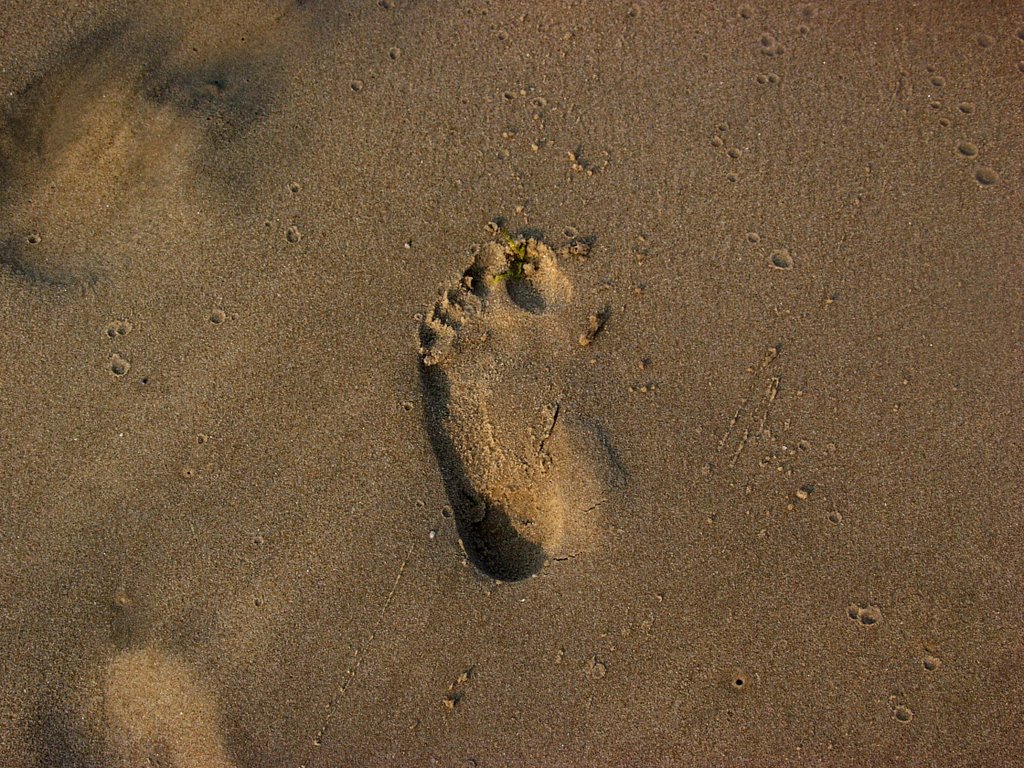
Tomorrow when your feet
also lose their prints, dust
will settle behind you:
the ground bones
of the earth.

Don’t cooperate.
Step hard, my son.
While you live, make
mountains of your wishes.
Carve your path deeply
onto the spine of the world.

© 2006 Christine Klocek-Lim

Poem Spark May 1-8 – Short Stanzas

Every Monday, at Poets.org’s Discussion Forums, I write a “poem spark” which is an exercise meant to spark an idea for a poem. Starting today, I’m going to begin posting them here to give everyone who stops by a fun thing to try out if boredom strikes. Hope you enjoy them!

~~~~~~~~~~~~~~~~~~~~~~~~~~~~

Hello fellow poets!

Today as I drove to school to pick up my sons, flowers were blooming everywhere. Of course, this puts me in mind of one of my favorite forms of poetry: haiku. Any other form that has its roots in ancient Japanese forms reminds me of the image and how often that idea takes shape in a poem and speaks through the description of the natural world. Another of these forms is the Tanka. Poets.org has an explanation of the tanka, and this particular piece caught my eye:

Quote:
Like the sonnet, the tanka employs a turn, known as a pivotal image, which marks the transition from the examination of an image to the examination of the personal response.


The important part of that quote is the idea of image. There is also a wonderful explanation of Imagism on this website and it says this:

Quote:
The Imagist movement included English and American poets in the early twentieth century who wrote free verse and were devoted to “clarity of expression through the use of precise visual images.”


By now you’re probably wondering what this has to do with the stanza, “unit of a poem often repeated in the same form throughout a poem; a unit of poetic lines.” I’ve often found that when concentrating on creating a poem that relies heavily on imagery rather than narrative to make a point, it helps immensely if one separates each image into two or three line stanzas.

Much attention is paid to a poem that has no extraneous verbiage weighing down the description. Each and every word becomes famous: each one is standing there alone on the stage. The poet must be certain that each word is central to the image and the poem’s meaning without much transition or extra adjectives to carry the poem’s voice.

This week’s poem spark: Write a poem that contains stanzas of two to three lines only.

Here are some examples of poems that work in this way:

Carolyn Kizer’s Villanelle On a Line from Valéry (The Gulf War)

Hsieh Ling-yun (translated by Sam Hamill) Visiting Pai-an Pavilion

William Carlos Williams This Is Just To Say

As always, be creative and have fun!

How to disappear completely


You wish there was nothing
but paradise
in the holes of the earth,
open doors all around.
Instead, the hollow soul
of the pavement calls: hurry,
hurry up, before you are swallowed.
You are ashamed because
you do not know if it is just sadness
that makes the sewer drains seem bigger.

And there are burn holes
in the living room carpet:
your father’s discarded cigarettes.
Holes in the sinks.
The bathroom mirror is a hole too.
When you look in, teeth
stare back. Behind this,
more bruised mirrors.

When you turn the lights off
your body becomes a hole
in the darkness. You are almost
not there.

And when you sleep,
you dream you are a door
becoming a hole, fist-sized,
big enough to let
anything in.

© 2006 Christine Klocek-Lim

National Poetry Month


April is National Poetry Month!

To celebrate, the Academy of American Poets is sponsoring all sorts of goodies: a Poetcast, a Poem-a-Day, and Life/Lines, to name a few. Today, my life/line is up on the Poets.org website. I picked a quote from James Wright’s poem, “How Spring Arrives”:

They too must have slept all night with their eyes open.

What is National Poetry Month you ask? From Poets.org’s FAQ:
“National Poetry Month was established by the Academy of American Poets as a month-long, national celebration of poetry. The concept was to increase the attention paid-by individuals and the media—to the art of poetry, to living poets, to our poetic heritage, and to poetry books and magazines. In the end, we hoped to achieve an increase in the visibility, presence, and accessibility of poetry in our culture. National Poetry Month has been successful beyond all anticipation and has grown over the years into the largest literary celebration in the world.”

The Goodnight Show

The Goodnight Show’s latest podcast is now available for your listening pleasure, featuring many fine poems (and one of mine). The latest show is called Beyond the Sea.

Michelle Buchanan, the podcast jockey (PJ), is wonderfully entertaining, and Didi Menendez is a fabulous producer.

Listen to Beyond the Sea and the other two shows, as well: Mello Yello and The Beat Goes On.

Fragile


I know these leaves
are not fragile,
but I’m alone
as I brush past them:
garbage in hand,
clear sky above
sharp with dawn.
The house is empty—
no socks on the floor,
no strands of hair in the tub,
just a few shreds
of cardboard from packing
and the fragile, faint
petal-soft
scent
of your missing soap.

© 2002 Christine Klocek-Lim

Fibromyalgia


Hands like clay, she slumps

some mornings like a bird
left too long asleep in the rain:
her pain comes and goes.

When the dull pattern
of storms lightens
she flies through the hours,
flexes her fingers
above the bright land
but even a sparrow knows
how much the rain
can narrow a day’s flight.

Often, before patience
takes hold, she flaps
her arms wildly
yet never lifts up.

This is when
she flutters quietly,
hands strapped
beneath twisted sheets,
wings fettered
beneath the weight
of too much clay.

© 2006 Christine Klocek-Lim