Poem Spark Nov. 13-20 – the Cento

Greetings fellow poets!

Some days when you wake up, it’s raining and you’re out of coffee (or tea, in my case). Sometimes the alarm doesn’t go off and you dash into your car a half-hour late. By the time you return home, you’re wet, hungry, and you have a wicked headache from caffeine deprivation. This is the kind of day when writing anything seems impossible. This is a cento day.

According to Poets.org, the definition of a cento is:

From the Latin word for “patchwork,” the cento is a poetic form made up of lines from poems by other poets. Though poets often borrow lines from other writers and mix them in with their own, a true cento is composed entirely of lines from other sources. Early examples can be found in the work of Homer and Virgil.

For the complete page on centos, go here: Poetic Form: Cento.

So, since the forecast here is calling for rain at least through Thursday, it looks like tomorrow and the day after will be a cento day, too. Your poem spark mission for this week: write a cento. Don’t stress-out. Feel free to mix up the lines with some of your own. Feel free to use just the end-of-line words from another poem for yours. Feel free to use just a title. It’s difficult to light a candle in the rain, but with the right spark, anything is possible.

If you’re looking for poems to steal (uh, I mean borrow) from, here are a few favorites:

Eleanor Wilner Moon Gathering

Anzhelina Polonskaya Sky

Stanley Kunitz The Portrait

Jane Hirshfield A Hand
Once the leaf falls


Your blue jacket is not the sky.
My hands are not skilled in all
things, as you once believed
long before your fingers grew
as strong as mine. Understanding
seems easy as you dismount
the bus, your backpack dangled
carelessly behind. The trees
above us do not interest you.
I document your footsteps
anyway, memorize the residue
of your childhood left behind
in the thick shadow of an oak
and its easy release of acorns
scattered into bits on the ground

as today’s wind moves your hair
aside, and not for the first time.
Suddenly your chin is strange.
My welcome falls into the breached
door of a future. Years from now
you will no longer be so pleased
to see me. Each week’s phone
call will fall upon the wry
ears of a man concerned
with different things

than those that interest me
now on this walk home beneath
turning leaves. Soon they will fall
into piles where I will pull you,
laughing as we jump into the damp
chaff of trees as though the weather
to come was not cold, not the end
of this year, not a difficult movement
into a season of harsh revelation.
You have no idea what bare branches
await, nearly broken already
from the collective descent
of autumn.

© 2006 Christine Klocek-Lim

It’s election day in the USA


Did you vote today? I voted around 9 am and at my rural Pennsylvania polling location, I was voter # 126. According to the workers there, that’s an unusual turnout for that early in the morning.


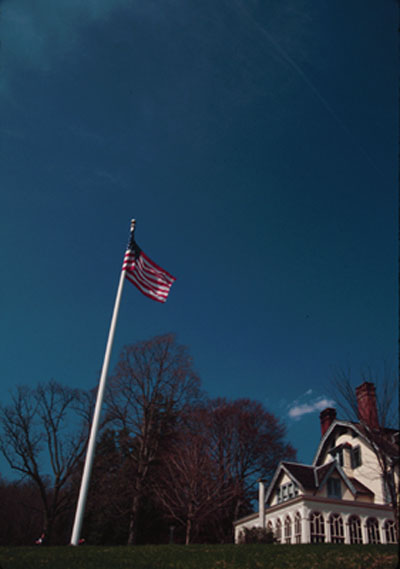
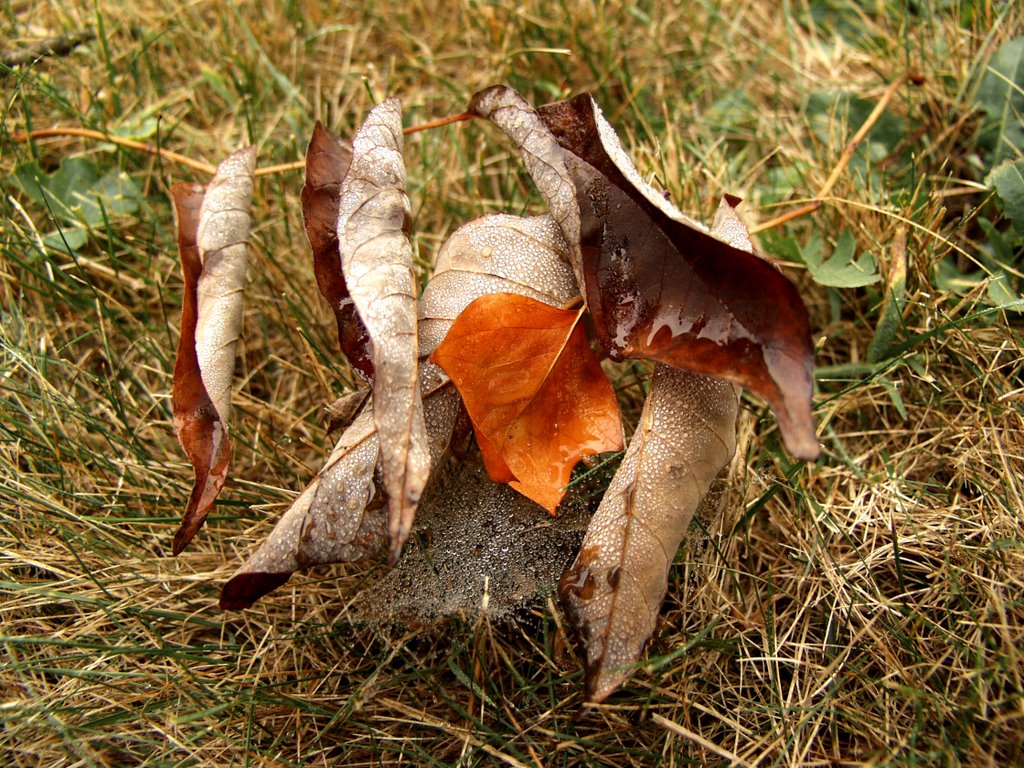
I took both of these photos in 2001. The first is the view out of one of the windows in the Metropolitan Museum of Art, New York, taken in February. The second is at Ringwood Manor in New Jersey, taken in May.

Quotation fun — Is political poetry valid in the USA?

These quotations are from the book, “Giving Their Word — Conversations with Contemporary Poets,” edited by Steven Ratiner. The quotations are taken from the chapter, “Carolyn Forché — The Poetry of Witness,” who Ratiner interviewed in 1994.

This first excerpt is taken from page 148:

Steven Ratiner wrote:
One of my first questions concerned her reputation as a “political poet,” a category generally disparaged in American Letters and viewed as a hybrid of the partisan polemicist and the benighted idealist. Her response enveloped the better part of the day and, in the process, provided powerful insights into the politics of language and the education of a young woman writer in the realpolitik of the literary world.

This second excerpt is taken from pages 156-157:

Carolyn Forché wrote:
“By 1980, it had become apparent to me that many Salvadorans had invested their time and even risked their lives to educate me about the situation in their country. And their hope, finally, was that I would come back to the U.S. and talk about it here. They didn’t realize that . . . discussing the circumstances that gave rise to the Salvadoran war wasn’t something expected of poets in my country and we wouldn’t be considered a viable source of information. I tried to explain, but because Latin Americans esteem poets so highly, they didn’t understand.”


To see the rest of this conversation, click here to enter the Poets.org discussion forum and view the comments.

Poem Spark Oct. 30-Nov. 6 – Spooky Poems

Greetings!

Because today is the day before Halloween, I think it is fitting that we dedicate this week’s spark to our favorite spooky poems. The first piece of poetry that I remember as spooky was from Shakespeare’s Macbeth:

Quote:
Round about the cauldron go;
In the poison’d entrails throw.
Toad, that under cold stone
Days and nights hast thirty one
Swelter’d venom sleeping got,
Boil thou first i’ the charmed pot.

It still brings a chill to my spine. Such ominousness! There are so many more, and a great place to begin to read them is on Poets.org’s front page: Poems in the Graveyard. From there it’s only a short click to this next page: The Graves of Poets.

I read the list of poets and their gravesites. Surely the spookiest is that of Hart Crane, “Drowned while returning to New York from Mexico, Body not recovered.” Of course, I clicked his page link and found this gem of a poem, At Melville’s Tomb. How fitting! Here are the first few lines:

Quote:
Often beneath the wave, wide from this ledge
The dice of drowned men’s bones he saw bequeath
An embassy. Their numbers as he watched,
Beat on the dusty shore and were obscured.

Almost prescient, these words. Did Crane know where his death would find him? Perhaps.

This week’s spark: write a spooky poem. Simple enough, yes? Or, if you cannot bear the walk into darkness, post a link to your favorite spooky poem (title and author if there is no link). Good luck! Happy hunting.

Poem Spark Oct. 16-23 – the Poet’s Poem

Greetings and Salutations!

Every day, once my house has sighed quietly in the wake of two kids gone to school and the tea in my cup begins to paint the air with ephemeral threads of steam, my thoughts turn to poetry. How can I describe this silence? What does it mean to spend time reading poems? What is the Spotlight Poem today on Poets.org?

Inevitably, I put these thoughts away in order to go about my day, but I always hope I can find a few minutes to jot down a phrase or two that might grow into a poem with enough care and attention. This is important to me, but I’m not sure why. What is it that makes me want to collect words? Why do poets love to play with language? The answers are as many and varied as there are poems in the world.

Here is an essay by Amy Lowell that speaks about The Poet’s Trade. In this short piece, she outlines her belief that a poem must be crafted, “As a matter of fact, the poet must learn his trade in the same manner, and with the same painstaking care, as the cabinet-maker.” Another poem written by Heather McHugh, begins as a narrative about poets traveling and follows them as they speculate about poetry and its root meaning: What He Thought. It is in the end of the poem where a greater meaning becomes surprisingly apparent to the reader. Poetry seems to spring not out of craft, but from a spontaneous gift on the part of the writer.

Your task this week is to write a poem about writing a poem, or about what it means to be a poet, or about how it feels to be inspired. Write a poet’s poem. Write a poem that only another writer will truly understand, but try to do it in a way that invites the non-writer into the poet’s world.

Here are some examples of what I’m talking about:

Thomas Lux Render, Render

Harryette Mullen All She Wrote

Charles Bukowski so you want to be a writer?

Richard Wilbur The Writer

Have fun. Be creative. Good luck! I leave you with this quote from this page on the Poets.org website, various quotes from On Poetry and Craft: Selected Prose of Theodore Roethke.

Theodore Roethke wrote:
“You must believe: a poem is a holy thing — a good poem, that is.”