
If I eat one more cookie I will explode.
Author Archives: Christine Klocek-Lim
Merry Christmas!
 Tea on Christmas morning. What could be better?
No snow here. . .

Autumn Sky Poetry – Number 4 available
 Greetings!
The fourth issue of Autumn Sky Poetry is now online.
Read poems by Robert Bolick, Laurie Byro, Jeffrey Calhoun, Lacie Clark, Laurel K. Dodge, Guy Kettelhack, David LaBounty, Duane Locke, Corey Mesler, and Cynthia Neely.
—It’s all about the poetry.
Sincerely,
Christine Klocek-Lim, Editor
Poem Spark Dec. 11-18 – the Ode
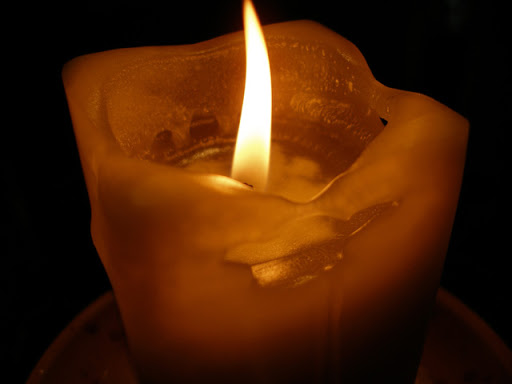 Greetings fellow poets!
Today’s sunrise swept over the land quietly, highlighting the yard and bare trees with delicate shades of rose and grey. A few stray cirrus clouds broke up the light behind the horizon. Perhaps the only way to describe how beautiful it felt to see the sun come over the windowsill would be to compose an ode. Poets.org has a lovely little explanation of the history of the ode and the most well-known forms of this particular form of poetry: Poetic Form: Ode.
However, what struck me most after reading through the page was the intent of this particular type of poem, “the ode can be generalized as a formal address to an event, a person, or a thing not present” This is too dry a recitation of definition. When I think of an ode, I think of my last bike ride, or my grandmother’s funeral, or the strange feeling that swept over me when my son’s first smile crept across his face. It is the lyric joy or sorrow of the moment or thing that inspires one to write an ode.
This week’s spark: write an ode. Don’t worry about fitting the poem into a formal robe, instead, write an irregular ode. Write an ode that is completely free, or that rhymes, or that feels like a sonnet, but isn’t quite. Let the poem choose its own way, and focus instead on the thing, the reason, the person for which the ode exists.
Here are some examples for you to use as a guide:
Robert Creeley America
Mary Oliver The Black Snake
Dorianne Laux Girl in the Doorway
John Keats Ode on a Grecian Urn
Quotation fun – Are poets introverts or extroverts?
In the Winter 2006 issue of Rattle, Alan Fox (editor-in-chief) interviews Jane Hirshfield.
| Jane Hirshfield wrote: |
| I think two kinds of people become poets. Extroverts who go out and entertain the family friends, and introverts who hide in the bedroom and put what they write under the mattress. Allen Ginsberg, I imagine, was the first kind; I was the second. For me, words were not about pleasing or entertaining others but about creating a place of refuge, where I could find something out about what it means to have and be a self. |
Which are you, introvert or extrovert? Although I enjoy a good conversation once in a while, I know I am an introvert. I appreciate silence.
Do you think a great poet must be either an introvert, or an extrovert? Of course, I’m inclined to think that the truly excellent poets are introverts, if only because they have the time to themselves to work on their poems. However, one could argue that the extroverts are the poets with more life experience, and thus, more important things to say.
Are any poets you know of both introverted and extroverted?
If you’d like see what others have said about this, go here.
It doesn’t get much better than this
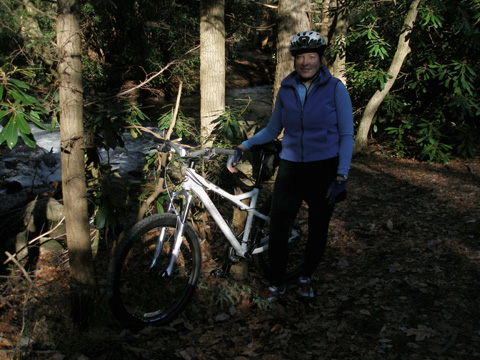 Me and my new mountain bike; a birthday gift from my husband. I can’t think of anything I like better than a good ride on a beautiful day. . .
Poem Spark Nov. 27 – Dec. 4 – Synesthesia
Greetings fellow poets. Several days ago I read an article in LiveScience about synesthesia: in poetry, the use of language that fuses imagery from one sense to another, from the Greek words for “joined feelings.” Some examples are: loud hands, bitter colors, a cold voice.
This technique has been used in poetry to great effect because it opens up a world of connotation that cannot otherwise be stated so simply. From academic.brooklyn.cuny.edu comes this explanation of how Keats used synesthesia in his poetry:
| Quote: |
| Keats’s imagery ranges among all our physical sensations: sight, hearing, taste, touch, smell, temperature, weight, pressure, hunger, thirst, sexuality, and movement. Keats repeatedly combines different senses in one image, that is, he attributes the trait(s) of one sense to another, a practice called synaesthesia. His synaesthetic imagery performs two major functions in his poems: it is part of their sensual effect, and the combining of senses normally experienced as separate suggests an underlying unity of dissimilar happenings, the oneness of all forms of life. Richard H. Fogle calls these images the product of his “unrivaled ability to absorb, sympathize with, and humanize natural objects.” |
Keats’ poem, Ode to a Nightingale, uses synesthesia—for example:
“In some melodious plot / Of beechen green” (stanza I), combines sound (“melodious”) and sight (“beechen green”).
Here are some other examples of poems that use synesthesia:
Arthur Rimbaud The Seekers of Lice and Vowels, one of the more famous synesthesia poems. According to answers.com:
| Quote: |
| In addition to drawing concerted scientific interest, the phenomenon of synesthesia started arousing interest in the salons of fin de siecle Europe. The French Romantic poets Arthur Rimbaud and Charles Baudelaire wrote poems which focused on synesthetic experience. Baudelaire’s Correspondances (1857) (full text available here) introduced the Romantic notion that the senses can and should intermingle. |
More poetic synesthesia examples:
Ann Stafford Listening to Color
Jim Harrison Birds Again
This week’s spark: write a poem that uses synesthesia. Good luck, be creative!
Check out "Simply Haiku"
Some of my photos are in this issue of Simply Haiku, with my friend Janet Lynn Davis’ luminous poetry. After clicking to enter the site and current issue, click on the Modern Haiga section.
Simply Haiku: A Quarterly Journal of Japanese Short Form Poetry
Winter 2006, Volume 4, Number 4
Catch Episode 17 of The Countdown, miPOradio’s poetry show:
Hosted by Bob Marcacci, this episode features poems by:
– Robert Bohm: All This
– Brian Boutwell: untitled
– Ash Bowen: Broken Sonnet to the Building Super
– Mackenzie Carignan: Fascicles
– Christine Klocek-Lim: Once the Leaf Falls
– John Korn: In Belly Wood Grove
– Lilith Nassuri: retro
– Luc Simonic: You, Time & Silly Dad – As of November.
– Harry K. Stammer: Terror 29
Whenever a writer is unable to record their poem, Julie Carter reads the poem for THE COUNTDOWN.
 Christine Klocek-Lim